Remittances and Crypto Use in Bangladesh: Why the Ban Holds Despite Record Inflows
Jun, 3 2026
For millions of families in Bangladesh is a South Asian nation where remittances have surpassed garment exports to become the largest source of foreign currency, money from abroad isn't just income-it’s survival. In fiscal year 2025, these inflows hit a staggering $30 billion. That number alone tells a story of economic resilience. But there’s a catch that often confuses expats and locals alike: while traditional channels are booming, cryptocurrency is digital assets like Bitcoin or USDT that remain strictly prohibited for financial transactions in Bangladesh under central bank regulations remains completely off-limits.
If you’re sending money home or receiving it, you might wonder why the government allows record-breaking bank transfers but slams the door on crypto. The answer lies in a complex mix of regulatory control, recent political shifts, and a massive push toward formalizing the economy through mobile finance rather than decentralized ledgers.
The Remittance Boom: How Bangladesh Hit $30 Billion
Let’s look at the numbers first because they are impressive. According to data from the Bangladesh Bank is the central monetary authority of Bangladesh responsible for regulating banks, issuing currency, and managing foreign exchange reserves, remittance inflows grew by 27 percent year-on-year in FY2025. March 2025 was particularly historic, recording $3.29 billion in a single month-a 64.7 percent jump from the previous year. Even by mid-2026 standards, this surge represents a dramatic reversal from earlier years when informal channels dominated.
Why the sudden spike? It wasn’t magic. It was policy. The central bank implemented market-driven competitive exchange rates. Before this, many migrants used informal networks because the official rates were unattractive. By letting the market set the rate, the government made legal transfers more profitable for senders. Additionally, strict oversight dismantled many Hundi is an informal, illegal cross-border money transfer system often used to bypass capital controls and banking regulations operations. A Bangladesh Bank official noted that Hundi declined substantially, likely due to political transitions, forcing funds back into official banking channels.
This shift has real-world impacts. Gross foreign currency reserves rose to $25.63 billion. The Balance of Payments posted a $3.3 billion surplus, reversing a $4.3 billion deficit from the prior year. For the average citizen, this means greater stability in the national currency and better access to imported goods.
The Crypto Prohibition: Hard Line or Smart Move?
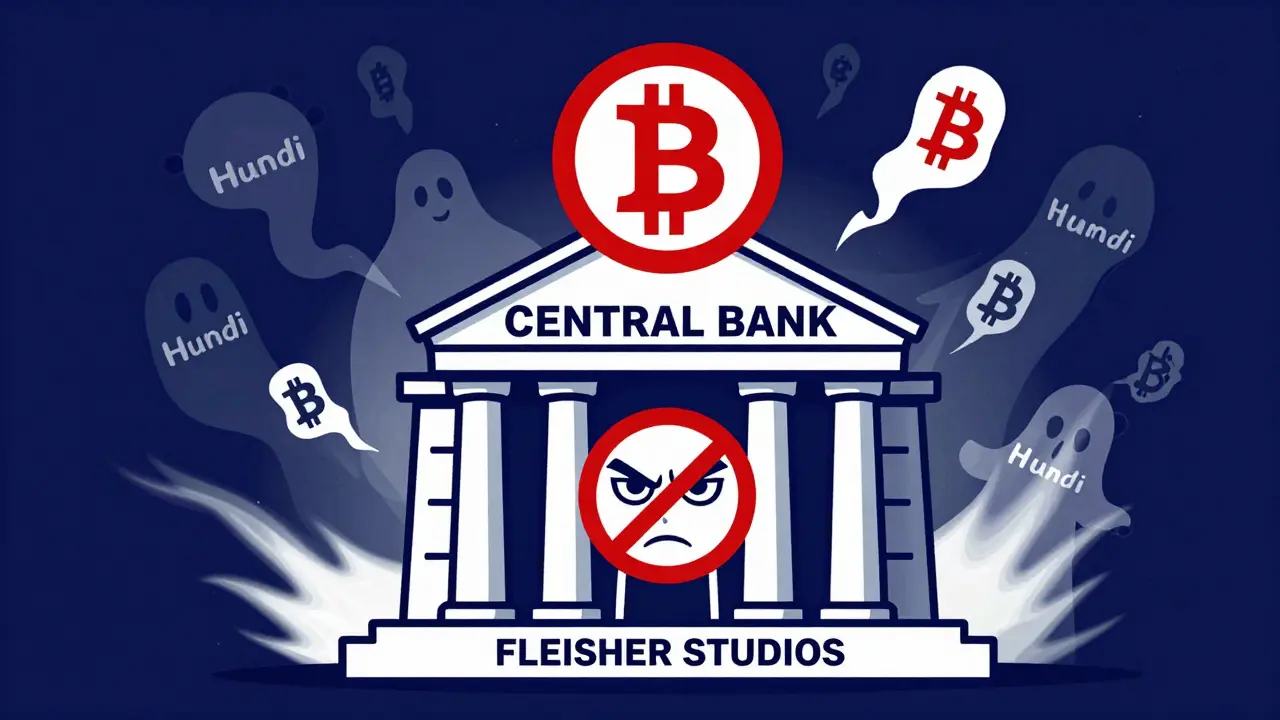
While banks celebrate, the crypto community faces a wall. Since 2017, the Bangladesh Bank has banned cryptocurrency usage under Section 33 of the Foreign Exchange Regulation Act 1947. This isn’t a temporary pause; it’s a structural prohibition. Deputy Governor Mr. Ahmed Munas stated clearly in September 2025 that cryptocurrencies pose "unacceptable risks to monetary sovereignty and financial stability."
You might ask: if crypto makes transfers faster and cheaper elsewhere, why not here? The concern is control. In a country where capital flight and informal economies have historically weakened the state’s grip on finances, allowing anonymous, borderless digital currencies is seen as a threat. The IMF mission chief for Bangladesh, Masahiko Takeda, echoed this in July 2025, suggesting that Bangladesh must strengthen its regulatory framework before considering any relaxation of crypto prohibitions.
Neighboring countries offer contrast. India and Pakistan have explored regulated frameworks. Bangladesh has not. Instead, it focuses on Central Bank Digital Currencies (CBDCs) are digital forms of fiat currency issued directly by the central bank, designed to combine blockchain efficiency with state control. While private crypto is banned, the central bank monitors CBDC developments globally. However, no domestic CBDC is live for retail use yet.
How People Actually Send Money Today
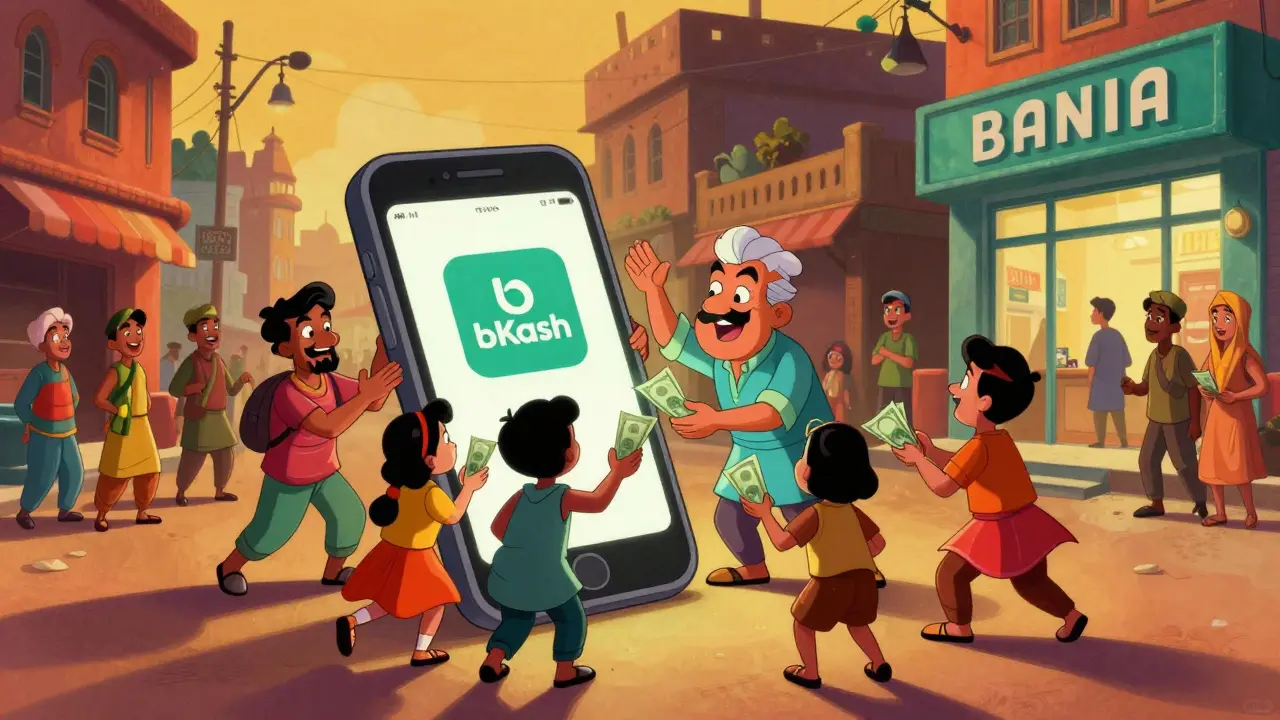
So, if you can’t use Bitcoin, how do you move money? The ecosystem has shifted heavily toward mobile financial services (MFS). Platforms like bKash is the leading mobile financial service provider in Bangladesh, enabling users to deposit, withdraw, transfer, and pay for goods using mobile phones and Nagad is a major mobile financial service in Bangladesh backed by the government, widely used for remittances and daily transactions dominate the landscape. As of late 2025, 87 percent of remittances are accessible through these mobile channels, up from 62 percent just two years prior.
Here’s how it works in practice:
- Sender Initiates Transfer: An expat in the UAE or UK uses a partner platform (like Western Union, Ria, or direct bank links) to send USD or EUR.
- Conversion: The funds are converted to Bangladeshi Taka (BDT) at the prevailing market rate.
- Delivery: The recipient receives the BDT instantly in their bKash or Nagad wallet, or it is deposited into a linked bank account.
User feedback highlights speed. One Reddit user reported receiving a UAE remittance in just 12 hours via bKash. However, costs remain a pain point. The World Bank reported average transaction costs of 6.5 percent in 2024, well above the Sustainable Development Goal target of 3 percent. Some users complain of paying 7 percent fees for UK remittances despite lower official rates.
Comparison: Formal Channels vs. The Gray Market
| Feature | Mobile Financial Services (bKash/Nagad) | Traditional Bank Transfer | Informal (Hundi/Crypto P2P) |
|---|---|---|---|
| Legality | Fully Legal | Fully Legal | Illegal / High Risk |
| Average Fee | 3.8% - 5.2% | 2% - 4% | Variable (often hidden) |
| Speed | Instant to 4 hours | 1-3 days | Hours to Days |
| Security | High (Regulated) | High (Regulated) | Low (Fraud/Theft risk) |
| Accessibility | High (Rural & Urban) | Medium (Urban focused) | Medium (Network dependent) |

Challenges Persisting in the System
Despite the boom, the system isn’t perfect. Dr. Khondoker Muzammel Huq, former chairman of Bangladesh Bank, warned that sustaining growth requires addressing structural bottlenecks. What are those bottlenecks?
First, documentation barriers. You need a National ID card, registered mobile number, and often a linked bank account. A UNDP study found that 18 percent of rural recipients still face barriers due to lack of proper identification. Second, exchange rate discrepancies. Mystery shopping exercises by the Bangladesh Bank in July 2025 revealed an average 1.2 percent difference in rates between different banks, confusing consumers who don’t know which channel offers the best value.
Third, processing delays for complex cases. While simple transfers are fast, larger amounts or those requiring enhanced due diligence can take 3-5 days. One user on Prothom Alo’s forum reported losing $300 in fees and waiting 10 days for a $500 remittance from Malaysia, highlighting that friction still exists in specific corridors.
Future Outlook: Integration and Expansion
Looking ahead to 2026 and beyond, the roadmap is clear: digitization without decentralization. The Bangladesh Bank launched the 'Remittance Direct' mobile app in August 2025, processing $1.2 billion with average fees of 3.8 percent. This app aims to cut out middlemen and reduce costs further.
A major development is the planned integration with India’s Unified Payments Interface (UPI), expected by Q2 2026. This could streamline remittances for the 1.2 million Bangladeshi workers in India, creating a seamless cross-border payment rail. The Asian Development Bank projects 15-18 percent remittance growth for FY2026, even amidst global economic headwinds.
However, the crypto ban shows no signs of lifting. Governor Dr. Ahsan H. Mansur stated unequivocally in October 2025 that "cryptocurrency has no place in Bangladesh's remittance ecosystem for the foreseeable future." For now, if you want to send money to Bangladesh, stick to the regulated apps. They are faster, safer, and increasingly affordable.
Is cryptocurrency legal for remittances in Bangladesh?
No. Cryptocurrency is strictly prohibited for financial transactions, including remittances, under Section 33 of the Foreign Exchange Regulation Act 1947. Using crypto for remittances can result in license revocation for providers and criminal prosecution for users.
What is the cheapest way to send money to Bangladesh in 2026?
The 'Remittance Direct' app launched by Bangladesh Bank offers some of the lowest fees, averaging 3.8 percent. Traditional mobile financial services like bKash and Nagad also offer competitive rates, though fees vary by corridor (e.g., UK vs. UAE). Always compare the total landed amount, not just the fee percentage.
Why did remittances increase so much in 2025?
The surge was driven by market-driven exchange rates that made legal transfers more attractive, strict crackdowns on informal Hundi networks, and improved accessibility through mobile financial services. Political transitions also redirected flows from informal to official channels.
Can I use bKash to receive international remittances?
Yes. bKash is one of the primary channels for receiving international remittances. Senders abroad use partner platforms to convert foreign currency to BDT, which is then credited instantly to the recipient's bKash wallet.
Will Bangladesh allow crypto in the future?
Current indications suggest no. Central Bank officials have repeatedly stated that crypto poses risks to monetary sovereignty. While they monitor Central Bank Digital Currencies (CBDCs), private cryptocurrencies remain banned for the foreseeable future.