Blockchain Token Sales: What They Are, How They Work, and What to Watch For
When you hear blockchain token sales, the process where new cryptocurrency projects sell digital tokens to raise capital before launching fully. Also known as token offerings, they’re how projects like Bifrost’s BNC or BakerySwap’s BAKE first get off the ground. But not all token sales are created equal—some fund real innovation, while others are just flashy scams. The difference comes down to one thing: tokenomics, the economic design behind a token, including its supply, distribution, and real-world use. A healthy token sale gives tokens to users who’ll actually use them—like gamers playing BRIL on Polygon or liquidity providers earning BAKE. A fake one dumps tokens on speculators with no plan beyond flipping.
That’s why you’ll see posts here about crypto airdrop, free token distributions meant to build community and reward early supporters that actually happened—like the official BNC airdrop—and others that didn’t, like the fake 1MIL or Swaperry claims. A real airdrop ties back to a working product, clear rules, and a team you can trace. A scam airdrop asks for your private key, pushes you to a fake website, or promises impossible returns. The same goes for token sales: if a project won’t tell you how the tokens will be used, or if the token can’t be traded anywhere, it’s probably worthless—like FRP or MANNA.
Blockchain token sales aren’t just about raising money. They’re about building ecosystems. That’s why validator node hardware specs matter—because if the network isn’t secure, the token has no foundation. That’s why you’ll find reviews of exchanges like Giottus and Unocoin here: if you buy a token, you need a place to trade it safely. And that’s why meme coins like PENGU or KORI are red flags—they have no utility, no team, and no long-term plan. Real token sales solve problems. Fake ones just take your money.
Below, you’ll find real reviews, deep dives, and scam warnings—all focused on what actually matters when it comes to blockchain token sales. No fluff. No hype. Just what you need to know before you invest, claim, or walk away.
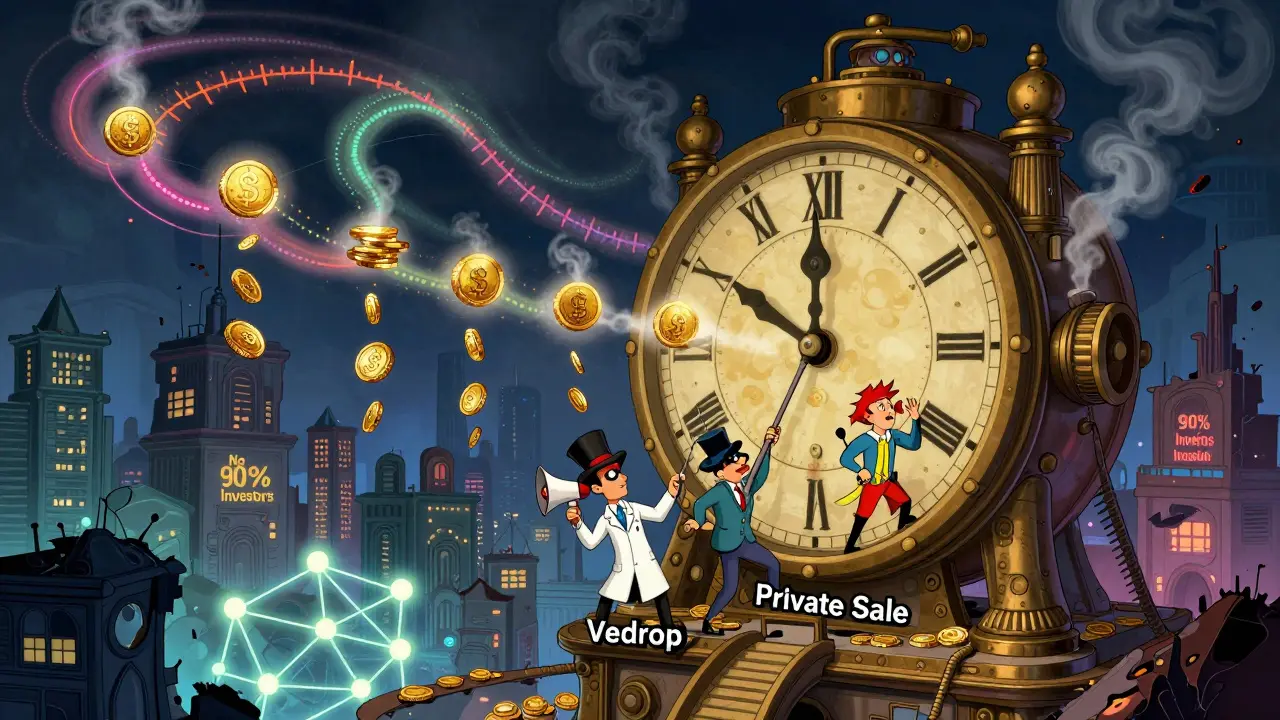
Token Distribution Models Explained: How Crypto Projects Allocate Tokens Fairly and Sustainably
Caius Merrow Dec, 7 2025 0Token distribution models determine how crypto tokens are allocated among investors, teams, and communities. Learn the five key methods, vesting schedules, legal risks, and what makes a model sustainable-or doomed.
More Detail