Token Distribution Models Explained: How Crypto Projects Allocate Tokens Fairly and Sustainably
Dec, 7 2025
Token Distribution Calculator
Distribution Analysis
Enter allocation percentages to check against industry standards from the article. Total must equal 100%.
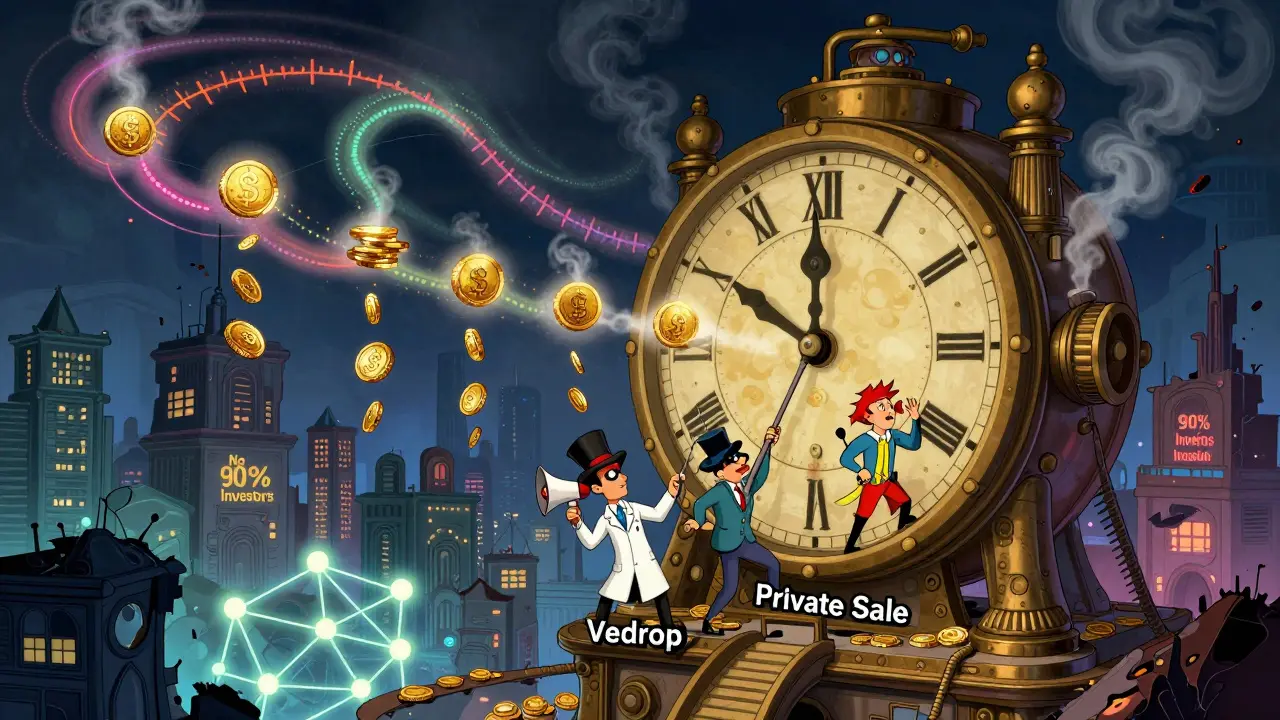
When a new blockchain project launches, it doesn’t just drop tokens into the market like confetti. There’s a plan. A careful, often complex plan called a token distribution model. This isn’t just about who gets tokens first-it’s about whether the project survives, thrives, or collapses within a year. Too many tokens in the hands of insiders? Price crashes. Too little incentive for early users? No community grows. The way tokens are handed out shapes everything: price, trust, adoption, and even legal risk.
How Token Distribution Started-and Why It Matters
Bitcoin didn’t need a fancy distribution model. It just gave tokens to whoever solved math problems. Miners got rewarded with new BTC every 10 minutes. Simple. Fair. Decentralized. But that model only works when you’re building a network from scratch with no upfront costs. When Ethereum launched in 2014, things changed. They raised $18.4 million by selling tokens before the network even went live. That was the first real Initial Coin Offering (ICO). Suddenly, projects weren’t just mining their way to life-they were selling their future. And that opened the door to big money, big risks, and big legal trouble. Today, token distribution isn’t one thing. It’s a mix of methods, each with trade-offs. Some projects give tokens away for free. Others lock them up for years. Some sell to rich investors. Others hand them out to everyday users who’ve been active for months. The right mix keeps the network alive. The wrong one kills it.The Five Main Ways Tokens Are Distributed
There are five common models used today. Most successful projects use a blend of them.- Private Sales: Big investors-funds like Andreessen Horowitz or Polychain Capital-buy tokens before the public can. In 2021, Solana raised $314 million this way. These deals often come with 30-50% discounts. The catch? These investors can dump their tokens later, crashing the price. That’s why vesting schedules matter.
- Public Sales (ICOs, IDOs, IEOs): Anyone can buy. ICOs happen on the project’s own site. IDOs are on decentralized exchanges. IEOs go through centralized exchanges like Binance. These are great for building a broad community. But they’re also the most regulated. The SEC charged 139 projects between 2017 and 2022 for selling unregistered securities.
- Airdrops: Free tokens given to users who did something-used the protocol, held another token, or joined the Discord. Uniswap’s 2020 airdrop gave 400 UNI tokens to 250,000 early users. That’s 15% of the total supply. But Chainalysis found 27% of those tokens were sold within days. These aren’t loyal users-they’re airdrop farmers.
- Lockdrops: You lock your tokens on one chain to get tokens on another. Cosmos did this in 2018. You had to lock ATOM tokens to get COSMOS tokens. It filters out speculators. You’re not just grabbing free money-you’re betting on the new network.
- Team & Advisor Allocations: The people who built the project get tokens too. Usually 15-30% of the total supply. But here’s the kicker: these tokens are almost always locked up for years. A 4-year vesting schedule is standard. If the team gets their tokens all at once? They’ll sell. If they’re locked in? They have skin in the game.
Vesting Schedules: The Hidden Lifeline of Token Projects
You can’t talk about token distribution without talking about vesting. It’s the invisible hand that stops insiders from running off with the money. A typical vesting schedule looks like this:- Team tokens: 4-year vesting, 12-month cliff. That means no tokens unlock for the first year. Then 1/48th unlock every month after.
- Advisors: 2-3 years, often with a 6-month cliff.
- Private sale investors: 1-2 years, with 10-25% unlocked at launch.
How Much Should Go to the Community?
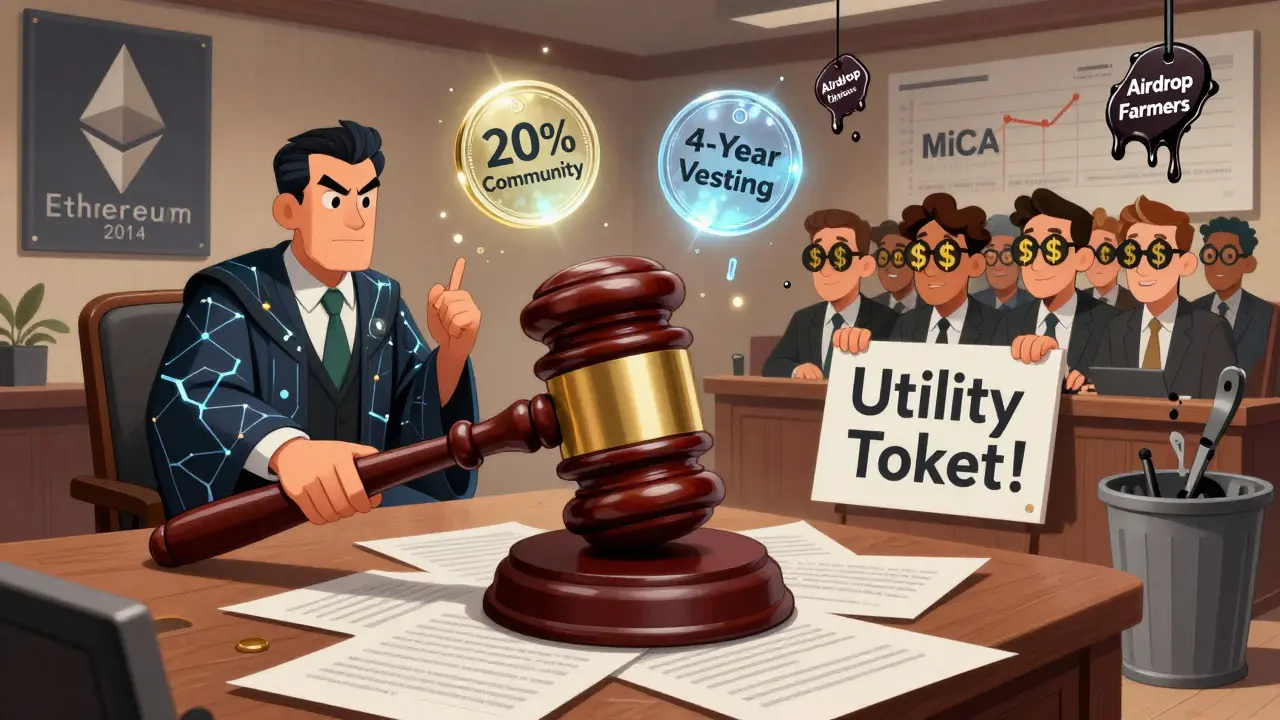
Here’s the truth: projects that give less than 20% of tokens to the community rarely last. The ones that give 30% or more? They grow 2.3 times faster, according to The Token Terminal’s 2024 report. Flow’s 2020 distribution is a textbook example: 29% to community rewards, 33% to investors, 38% to team. That’s not random. It’s strategic. The community got enough to feel ownership. The team got enough to build. Investors got a return, but not control. The best models don’t just give tokens-they give power. That means governance. Token holders vote on upgrades, treasury spending, even who gets hired. If 15% or more of tokens are reserved for governance, the project becomes a true decentralized network. Not just a company with a token.The Legal Minefield: Why SAFTs and Compliance Matter
In 2020, the SEC fined Blockstack $24 million for selling tokens that were unregistered securities. That was a wake-up call. You can’t just say “this is a utility token” and hope it sticks. That’s why SAFTs-Simple Agreements for Future Tokens-took over. They’re legal contracts. Investors pay now. They get tokens later, once the network is live. Protocol Labs used SAFTs for Filecoin in 2017. Now, 68% of new projects in 2024 use them, per the Chamber of Digital Commerce. But SAFTs aren’t magic. They cost $150,000 to $500,000 to set up right. You need lawyers. You need KYC/AML checks. You need to verify every investor. Chainalysis KYT alone runs $50,000-$200,000 a year. Most small teams can’t afford it. That’s why so many projects still get shut down. The EU’s MiCA regulation, which took effect in June 2024, is making things clearer. All projects must now publish detailed token allocation tables, updated every quarter. No more hiding who owns what.What Makes a Token Distribution Model Successful?
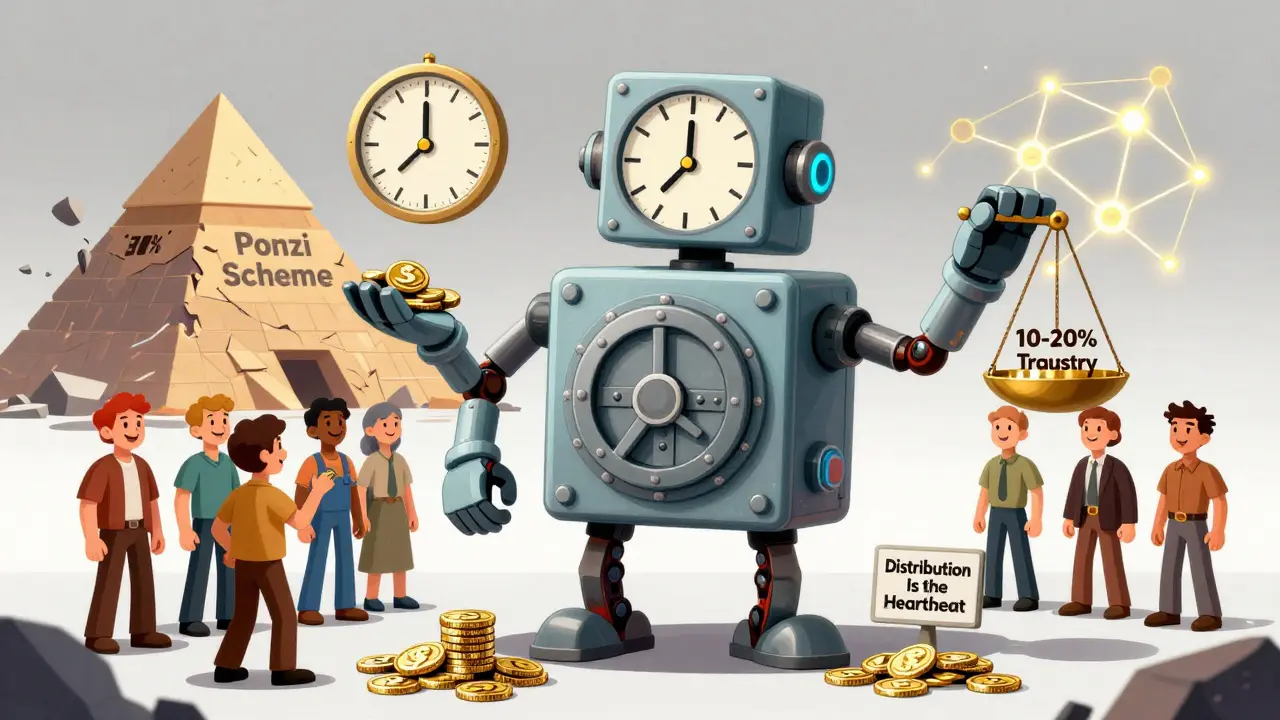
After studying hundreds of projects, experts agree on five rules:- Don’t let one group own more than 20%. If a single investor or team holds too much, the network isn’t decentralized. It’s a Ponzi.
- Give tokens real use. If you can’t stake them, pay fees with them, or vote with them-they’re just digital IOUs.
- Keep token velocity low. If each token changes hands more than 5 times a day, it’s being traded, not used. That’s speculation, not adoption.
- Be transparent. Publish your smart contracts. Show your vesting schedule. Update your distribution data every week.
- Build a treasury. Don’t spend all the raised money on marketing. Keep 10-20% for future development. Michael Novogratz found that 68% of failed DeFi projects ran out of cash within 18 months because they didn’t reserve enough.
The Future: Dynamic Models and Real-World Assets
The old models are changing. Projects like KlimaDAO now adjust token distribution based on market conditions. If the price drops, they give more tokens to stakers. If it rises, they slow down. It’s like a living economy. Then there’s tokenized real-world assets (RWAs). Ondo Finance’s USDY stablecoin isn’t just a crypto token-it’s backed by U.S. Treasury bonds. It’s distributed like a crypto project, but regulated like a bank product. That’s the future: hybrid models that bridge finance and blockchain. By 2026, Messari predicts 80% of successful projects will have community-controlled treasuries over 40%. That means the users-not the founders-decide how money is spent.What to Watch For: Red Flags in Token Distribution
Not all distribution models are equal. Here’s what to avoid:- No vesting schedule. If the team gets all their tokens at launch? Run.
- More than 50% to investors. That means the community has no power.
- Airdrops with no usage requirements. If you can get tokens just by signing up, they’re not building a community-they’re buying attention.
- No public documentation. If you can’t find the token allocation breakdown on their website? They’re hiding something.
- Overpromising utility. “This token will pay for everything!” is a lie. Real utility is narrow and specific.
Final Thought: Distribution Is the Foundation
A great product can’t save a bad token model. A brilliant team can’t fix a 90% investor allocation. Token distribution isn’t a technical detail-it’s the heartbeat of the project. The projects that last aren’t the ones with the flashiest whitepapers. They’re the ones that gave their users a real stake. That’s the difference between a crypto trend and a lasting network.What is the most common mistake in token distribution?
The most common mistake is giving too much to insiders-founders, investors, or advisors-without proper vesting. When large amounts of tokens unlock all at once, it floods the market and crashes the price. Projects that don’t stagger unlocks or fail to lock team tokens for at least 3 years rarely survive beyond 2 years.
Can a token distribution model be too fair?
Yes. If a project gives 100% of tokens to the community and raises no capital, it won’t have funds to develop the product. Most successful models balance fairness with funding. A good rule of thumb: 30-40% for community, 20-30% for investors, 20-30% for team, and 10-15% for reserves. The key is alignment-everyone’s incentives must match the project’s long-term success.
Why do airdrops often fail to build real communities?
Airdrops attract people looking for free money, not long-term users. Chainalysis found that 27% of airdropped tokens are sold within days. These are “farmers” who automate claims and cash out. Real community members engage with the protocol, use its features, and vote on governance. Airdrops only work when they reward active participation-not just wallet ownership.
How do vesting schedules affect token price?
Vesting schedules directly control supply flow. When large unlock events happen, supply spikes. If demand doesn’t match, price drops. Projects that announce unlocks weeks in advance and use buybacks or liquidity incentives see much smaller price swings. For example, Ethereum’s team tokens unlock slowly over 4 years, avoiding big dumps. Projects with 1-year cliffs often see 20-30% price drops on unlock day.
Is it legal to sell tokens before the network launches?
It depends. In the U.S., the SEC considers pre-launch token sales as securities unless the token has clear utility and the network is fully decentralized. SAFTs are designed to comply with this-investors buy an agreement, not a token. But many projects still get fined for misrepresenting their tokens as “utility” when they’re effectively investment contracts. The EU’s MiCA rules now require clear disclosures, making legal compliance more predictable.
What percentage of tokens should go to the treasury?
A healthy treasury holds 10-20% of the total supply. This fund pays for development, marketing, audits, and emergency reserves. Projects that allocate less than 10% often run out of money within 18 months. The best projects use treasury votes-token holders decide how to spend it. This turns investors into stakeholders and builds long-term trust.