Token Distribution Models: How Crypto Projects Allocate Coins and Why It Matters
When you buy a crypto token, you’re not just buying a digital asset—you’re buying into how its value is token distribution models, the system that decides who gets tokens, when, and in what quantity. Also known as token allocation strategies, it’s the invisible hand behind whether a project survives or collapses. A poorly designed distribution can turn a promising idea into a ghost token with no buyers, no liquidity, and no future. On the flip side, a fair, transparent model builds trust, attracts real users, and keeps the network secure.
Think of it like a pizza. If one person gets 90% of the slices, everyone else is left hungry—and they’ll walk away. That’s what happens when founders or venture capitalists hoard most of the supply. Projects like Bifrost BNC, a token distributed through staking and exchange eligibility or BakerySwap BAKE, rewarded only to liquidity providers prove that fairer models create stronger communities. These aren’t random giveaways—they’re strategic moves to align incentives. When users earn tokens by holding, staking, or using the platform, they become invested in its success, not just hoping for a quick flip.
But not all distributions are built to last. Many tokens, like FRP, a reward token locked inside a closed ecosystem with zero trading volume, exist only on paper. They’re not meant to be traded—they’re designed to look like investments, but they offer no real utility. Then there are the meme coins with quadrillions of tokens, like PENGU, a token with a market cap under $400 and zero real demand. These rely on hype, not structure. The difference? One has a clear path for value creation; the other has a countdown to zero.
Token distribution ties directly to tokenomics—the economic engine behind every coin. It affects supply, liquidity, inflation, and even security. If too many tokens are released at once, the price crashes. If too few go to the public, the project feels centralized and rigged. The best models balance early backers, team incentives, community rewards, and long-term reserves. You’ll see this in projects that use airdrop distribution, targeted giveaways to early adopters or active users to kickstart adoption without dumping supply on exchanges.
What you’ll find in the posts below isn’t just a list of coins—it’s a breakdown of how real projects got it right or totally failed. From the locked-up tokens of Brilliantcrypto BRIL, a gaming token with clear use cases to the empty promises of 1MIL airdrop, a fake claim flooding social media, you’ll learn how to spot the difference. No fluff. No hype. Just what the numbers, timelines, and real-world usage tell you about who really benefits—and who gets left holding the bag.
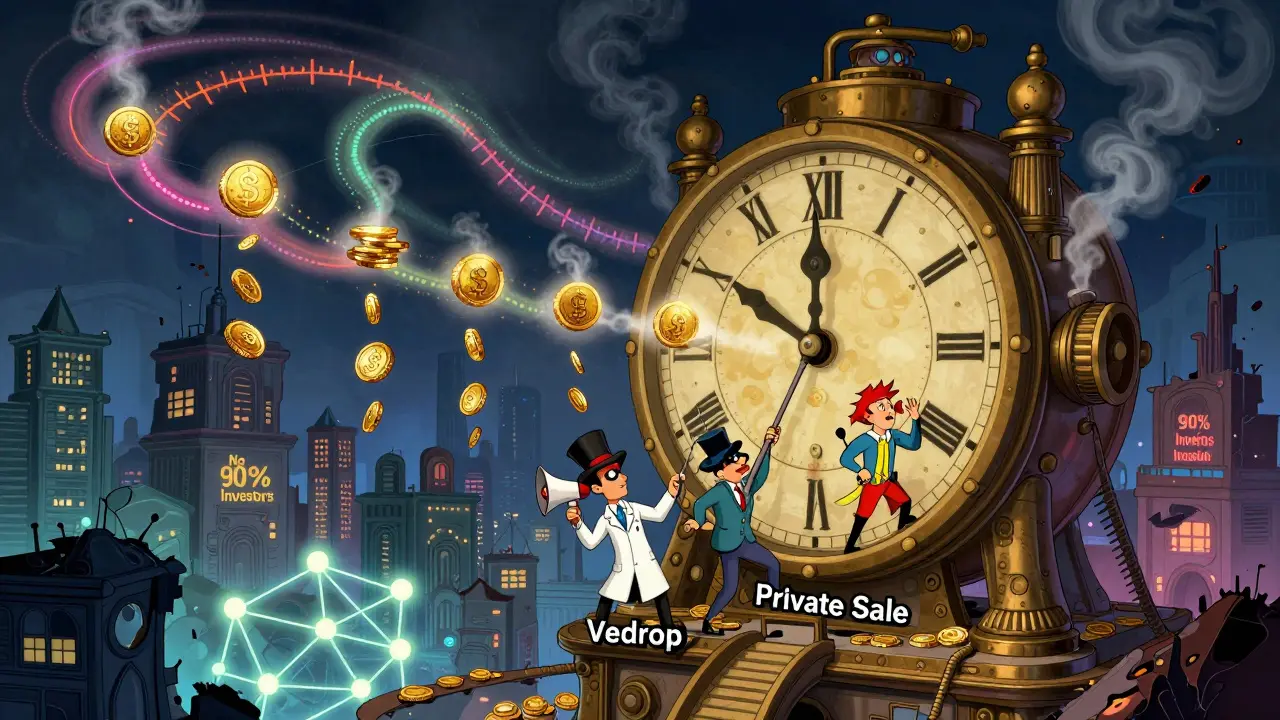
Token Distribution Models Explained: How Crypto Projects Allocate Tokens Fairly and Sustainably
Caius Merrow Dec, 7 2025 0Token distribution models determine how crypto tokens are allocated among investors, teams, and communities. Learn the five key methods, vesting schedules, legal risks, and what makes a model sustainable-or doomed.
More Detail