What is Access Protocol (ACS) Crypto? A Guide to Web3 Subscriptions
Sep, 8 2026
Imagine logging into your favorite news site or research platform without ever entering a credit card number. No monthly charges hitting your bank account at midnight. No forgotten free trials turning into expensive habits. Instead, you lock up a few digital tokens in a smart contract, and the paywall opens instantly. That’s the core promise of Access Protocol, a Web3 solution that swaps traditional fiat subscriptions for blockchain-based staking. Its native token, ACS, acts as the key to this ecosystem. If you’ve seen ACS trending on Solana exchanges or heard about it in crypto media circles, you might be wondering: Is this just another speculative coin, or does it actually solve a real problem for creators and readers?
The answer lies in how it handles value transfer. Unlike Bitcoin, which stores value, or Ethereum, which executes complex contracts, ACS is a utility token designed specifically for access control. It operates primarily on the Solana blockchain, leveraging its high speed and low fees to make micro-transactions feasible. As of September 2026, ACS trades at sub-cent levels, around $0.00015, with a market cap hovering near $16 million. While these numbers are modest compared to giants like SOL or ETH, they reflect a niche asset that has carved out a specific role in the digital media landscape. This guide breaks down exactly what ACS is, how the staking model works, and whether it holds long-term potential.
How Access Protocol Replaces Credit Cards
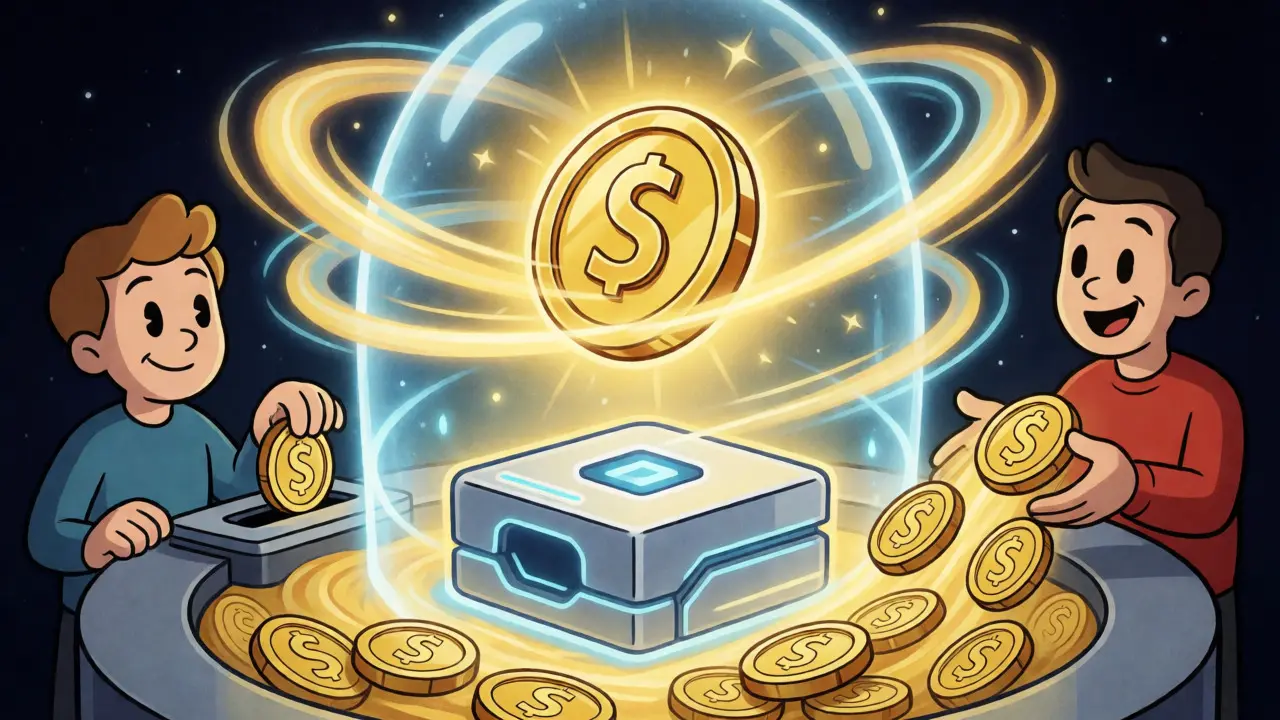
Traditional online subscriptions are friction-heavy. You sign up, provide payment details, and hope you remember to cancel before the renewal date. Access Protocol flips this model. Instead of paying money away permanently, you stake ACS tokens. When you stake ACS into a creator’s pool, you gain access to their premium content. The tokens remain yours; they are simply locked in a smart contract. If you decide to stop reading, you unstake the tokens, and your access ends. Your capital returns to your wallet, minus any minor transaction fees.
This mechanism aligns incentives in a way fiat subscriptions don’t. In a standard model, if you stop paying, the creator loses revenue immediately. In the Access Protocol model, the creator benefits from the total amount of ACS staked across the protocol. They receive distributions of newly minted ACS based on their share of the total staked supply. This means creators are rewarded for attracting and retaining engaged users who keep their tokens staked, rather than just those who swipe a card once a month.
| Feature | Traditional Fiat Subscription | Access Protocol (ACS Staking) |
|---|---|---|
| Payment Type | Recurring cash/card charge | One-time token lock (stake) |
| Asset Retention | Money spent is gone | Tokens return upon unstaking |
| Creator Revenue | Direct per-user fee | Proportional yield from protocol inflation |
| User Experience | Multiple logins/payments | Unified token across creators |
The Tokenomics: Inflation and Burn Mechanics
To understand ACS’s value proposition, you have to look at its supply dynamics. ACS is an inflationary token. The protocol issues new tokens annually at a rate of 7%. This isn’t arbitrary; it’s the fuel that powers creator rewards and user staking yields. Half of this inflation (3.5%) goes to creators’ pools, and the other half goes to users who stake their tokens. This creates a continuous reward loop: users earn more ACS by keeping their tokens locked, and creators earn ACS by having more tokens locked in their pools.
However, infinite inflation can dilute value. To counteract this, Access Protocol incorporates a burn mechanism. Specifically, there is a 2% burn on locking interactions. Every time you stake or interact with certain features, a small portion of ACS is sent to a dead address, permanently removing it from circulation. Additionally, the protocol offers "forever subscriptions." In this scenario, users choose to burn their staked ACS entirely in exchange for permanent access. This reduces supply while providing immediate liquidity to the creator pool, balancing the inflationary pressure.
As of late August 2026, the total supply of ACS stands at approximately 90.44 billion tokens, with about 53.69 billion in circulation. The uncapped maximum supply means the project’s sustainability depends heavily on demand. If more people want to access content, they buy and stake ACS, increasing demand. If adoption stalls, the constant issuance of new tokens could weigh on the price. It’s a delicate balance between rewarding participation and managing scarcity.
Ecosystem Integrations and Creator Coins
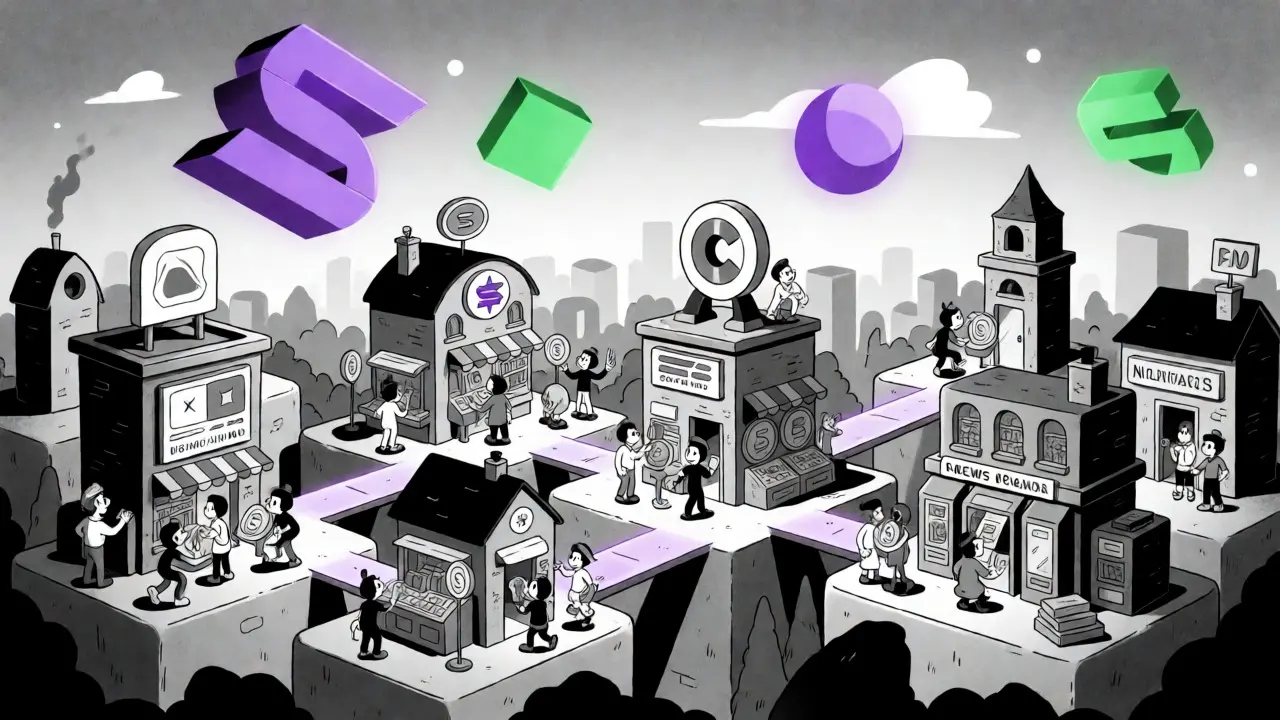
Access Protocol doesn’t operate in a vacuum. It integrates with major crypto media outlets like CoinGecko and The Block, allowing users to stake ACS to unlock paywalled articles and data reports. These partnerships validate the model, showing that established brands see value in moving away from rigid fiat paywalls. But the ecosystem expanded significantly in August 2025 with the launch of Creator Coins.
Creator Coins are custom tokens launched by individual creators on top of the Access Protocol infrastructure. Here’s where ACS becomes even more critical: it serves as the base currency for these launches. To buy a Creator Coin, users often need ACS. This created a secondary layer of demand for the token. When Creator Coins launched, ACS saw a notable price surge, jumping roughly 100% in response to the increased utility. This demonstrates how the protocol evolves, adding layers of complexity and utility to drive token velocity.
The protocol also extends beyond Solana. ACS has integration with Starknet, a Layer-2 scaling solution for Ethereum. This cross-chain capability allows ACS holders on different networks to participate in the same ecosystem, broadening the potential user base. By supporting multiple chains, Access Protocol avoids being locked into the performance or congestion issues of a single blockchain.
How to Buy and Stake ACS
If you’re interested in trying this model, the process is straightforward but requires a bit of technical comfort. First, you need a compatible wallet. Phantom is the most popular choice for Solana assets and natively supports ACS. Once you have your wallet set up, you’ll need to acquire ACS tokens. You can buy them on centralized exchanges like Gate.io or through decentralized exchanges (DEXs) on Solana, such as Orca or Raydium.
After acquiring tokens, you connect your wallet to the Access Protocol website. You browse available creators-ranging from crypto news sites to independent blogs-and select one to support. You then specify the amount of ACS you wish to stake. Confirm the transaction in your wallet, and within seconds, your access is granted. The beauty of this system is its reversibility. If you find the content lacking, you can unstake your tokens and move them to a different creator’s pool. There are no cancellation fees, only network gas fees, which are negligible on Solana.
- Step 1: Install a Solana wallet like Phantom.
- Step 2: Purchase ACS via a DEX or CEX.
- Step 3: Visit the Access Protocol dApp and connect your wallet.
- Step 4: Select a creator and stake your desired amount of ACS.
- Step 5: Enjoy premium content until you choose to unstake.
Risks and Considerations
No investment or utility token is without risk. ACS is a small-cap asset, meaning it is highly volatile. With a daily trading volume often under $250,000, large sell-offs can cause significant price swings. Liquidity on some DEX pairs can be thin, leading to slippage if you try to trade large amounts quickly. Always check the order book depth before executing big trades.
Furthermore, the token’s value is tied to the success of the protocol’s adoption. If creators leave the platform or if users prefer traditional subscriptions, demand for ACS could drop. The inflationary nature of the token means that unless staking demand grows faster than the 7% annual issuance, the price may face downward pressure over time. Investors should view ACS not as a store of value like Bitcoin, but as a utility asset whose worth fluctuates with the health of the creator economy it serves.
Despite these risks, the innovation is tangible. For readers tired of subscription fatigue, ACS offers a flexible alternative. For creators seeking predictable, community-backed revenue streams, it provides a novel financial tool. Whether ACS becomes a standard for Web3 media remains to be seen, but its current operational status and ongoing development suggest it’s more than just a fleeting trend.
Is ACS a good investment?
ACS is a utility token, so its value depends on the adoption of the Access Protocol. It has high volatility and inflationary mechanics. It may offer yield opportunities for stakers, but it carries higher risk than established cryptocurrencies due to its smaller market cap and niche use case.
Do I lose my ACS when I subscribe?
No, unless you choose a "forever subscription" option where tokens are burned. In standard staking, you lock your ACS to gain access. When you unsubscribe, you unstake the tokens, and they return to your wallet.
Which wallets support ACS?
Since ACS is primarily a Solana SPL token, wallets like Phantom, Solflare, and Backpack work best. Some multi-chain wallets that support Solana assets will also display ACS balances.
How do creators earn money with ACS?
Creators earn ACS through two main channels: direct distribution from users staking in their pool and a share of the protocol's inflationary rewards proportional to their total staked amount relative to the entire network.
Can I use ACS on Ethereum?
While ACS originated on Solana, it has integrations with Starknet, which is connected to Ethereum. However, the primary liquidity and staking functionality currently reside on the Solana network.