What is Market Cap in Cryptocurrency? A Beginner’s Guide to Token Value
Jun, 16 2026
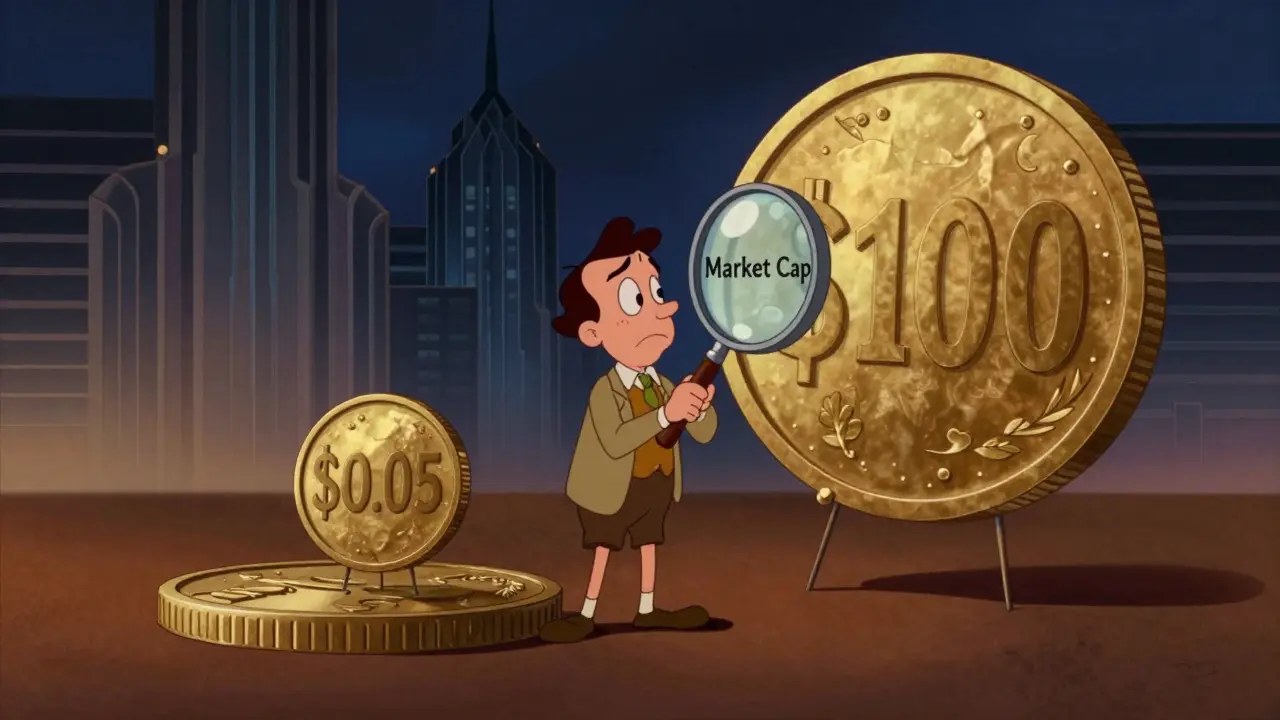
You see a coin trading at $0.05 and another at $100. Which one is the bigger investment? If you guessed the $100 coin, you might be missing the most important number in crypto: market cap. Price alone tells you nothing about a project's true size or stability. Market capitalization does.
Market cap is the total value of all coins currently available for trade. It strips away the illusion of cheap prices and reveals whether you are looking at a giant like Bitcoin or a tiny experiment with high risk. Understanding this metric is the difference between gambling on hype and investing based on data.
The Simple Formula Behind Crypto Value
Calculating market cap is not rocket science. It uses a basic multiplication formula that anyone can apply if they have the right numbers. The equation is:
Market Capitalization = Circulating Supply × Current Price Per Token
Let’s break down these two components because they are often confused.
- Circulating Supply: This is the number of tokens actively in the hands of the public. These are coins you can buy, sell, or hold today. It excludes coins that are locked up by developers, reserved for future team members, or not yet mined.
- Current Price: This is the real-time trading price of a single token on exchanges.
For example, imagine a new token called "AlphaCoin." There are 1 million AlphaCoins in circulation, and each trades for $10. The market cap is 1,000,000 × $10 = $10 million. Now look at "BetaCoin," which has 1 billion coins in circulation but trades for just $0.01. Its market cap is also $10 million (1,000,000,000 × $0.01). Even though BetaCoin looks "cheaper" per unit, both projects have the exact same total market value. This comparison stops you from falling into the trap of thinking a low-price coin is an easy bargain.
Why Circulating Supply Matters More Than Total Supply
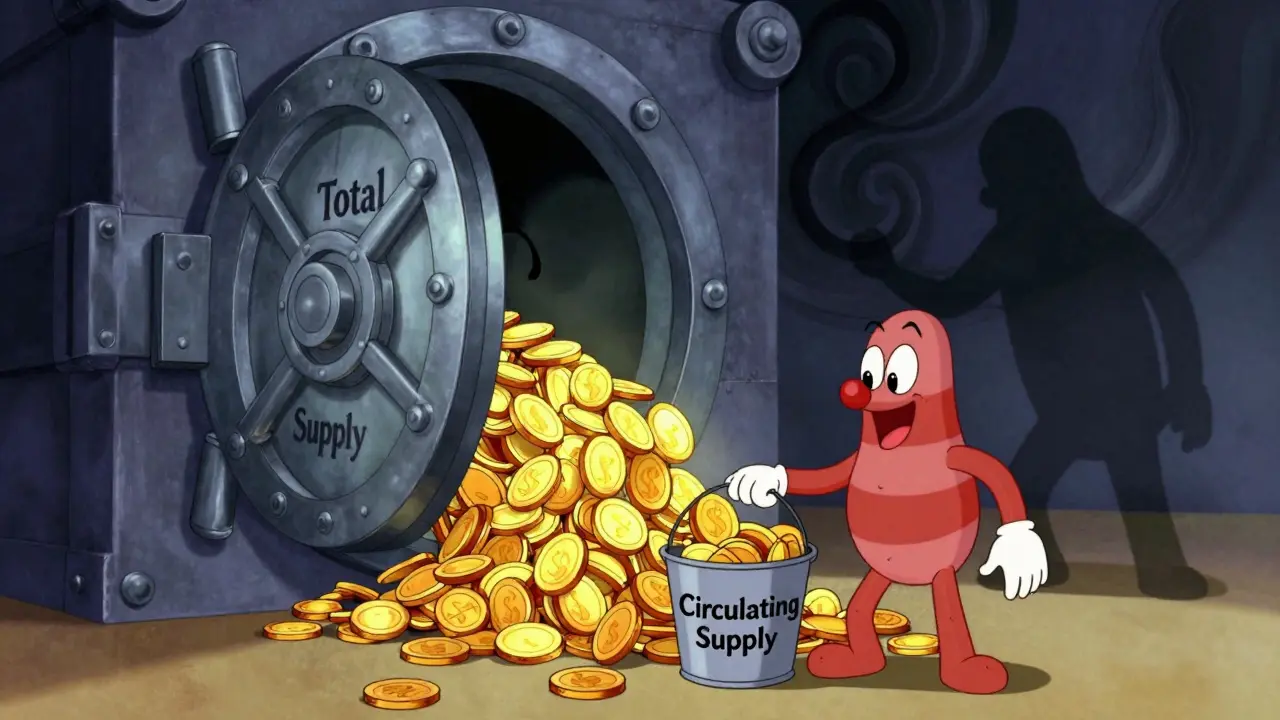
A common mistake beginners make is using the "Total Supply" or "Max Supply" to calculate market cap. This leads to inflated numbers that don’t reflect reality. You must use Circulating Supply The amount of cryptocurrency units that have been issued and are publicly traded.
Consider Bitcoin. The maximum supply will ever be 21 million BTC. However, as of mid-2026, only about 19.7 million BTC are actually in circulation. If you calculated Bitcoin’s market cap using the full 21 million, you would overstate its current value. The circulating supply accounts for lost wallets, unmined blocks, and coins held in cold storage by entities like governments or corporations that aren’t actively trading.
This distinction becomes critical when comparing different cryptocurrencies. Some projects release all their tokens at once, while others drip-feed them over years through vesting schedules. A coin with a low circulating supply but a huge total supply might seem valuable now, but it faces massive inflation pressure later when those locked tokens unlock and hit the market.
Large-Cap vs. Small-Cap: Risk and Reward Profiles
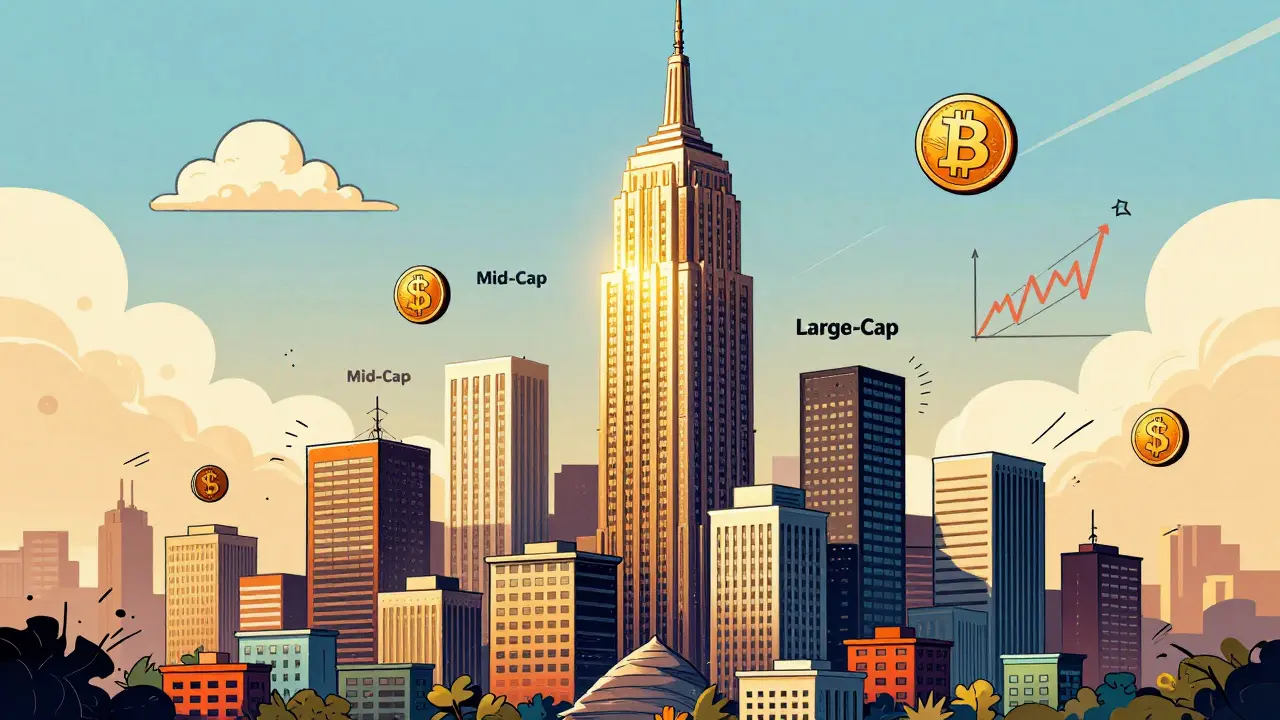
Just like the stock market, the crypto world categorizes assets by their market capitalization. These categories help you gauge risk. Here is how the tiers generally break down:
| Category | Market Cap Range | Risk Level | Characteristics |
|---|---|---|---|
| Large-Cap | $10 Billion+ | Lower | Established projects (e.g., Bitcoin, Ethereum). High liquidity, lower volatility, slower growth potential. |
| Mid-Cap | $1 Billion - $10 Billion | Moderate | Growing projects with proven use cases. Balance of stability and upside potential. |
| Small-Cap | $100 Million - $1 Billion | High | Newer or niche projects. High volatility, higher chance of failure, but potential for significant gains. |
| Micro-Cap | Under $100 Million | Very High | Experimental or meme coins. Extreme volatility, prone to manipulation, often lack real utility. |
Large-cap coins like Bitcoin and Ethereum act as anchors. They require billions of dollars in buying pressure to move their price significantly. This makes them less susceptible to sudden crashes caused by a single large seller. In contrast, a micro-cap coin can double or halve in price within hours based on social media trends or small whale transactions. Knowing where a coin fits helps you decide if you want safety or speculative excitement.
Fully Diluted Valuation: Looking Into the Future
While standard market cap looks at today’s supply, savvy investors also check the Fully Diluted Valuation (FDV) The theoretical market cap if all possible tokens were in circulation. FDV calculates what the market cap would be if every single token that will ever exist was already released.
The formula is simple: Max Supply × Current Price.
Why does this matter? Imagine a new DeFi protocol launches with a market cap of $50 million. Sounds reasonable, right? But if its max supply is 10 times larger than its current circulating supply, the FDV is $500 million. This means there is massive selling pressure waiting in the wings. As more tokens unlock over the next few years, the price may need to drop significantly to maintain that valuation unless demand explodes proportionally.
A wide gap between Market Cap and FDV is a red flag for many analysts. It suggests the project is undervalued today only because most tokens haven’t entered the market yet. Always compare these two numbers before committing funds.
How Market Cap Changes: Supply Shocks and Burns
Market cap isn’t static. It fluctuates due to two main drivers: price changes and supply changes. While price swings are obvious, supply changes are often overlooked until they cause pain.
Token Unlocks: Many projects lock tokens for founders, investors, and teams. When these locks expire, millions of tokens can suddenly become tradable. If demand doesn’t increase to absorb this new supply, the price drops, lowering the market cap. This is known as an "unlock event" and is tracked closely by investors.
Token Burns: Conversely, some projects implement deflationary mechanisms by "burning" tokens-permanently removing them from circulation. Ethereum, for instance, burns a portion of transaction fees during network activity. By reducing the circulating supply, burning can create upward pressure on price, assuming demand remains constant. This dynamic shifts the market cap calculation even if the price per token stays flat.
Mining Rewards: For proof-of-work coins like Bitcoin, new coins are created through mining. This slowly increases the circulating supply. However, Bitcoin’s "halving" events reduce the rate of new issuance, creating periodic supply shocks that historically impact market cap dynamics.
Tools to Track Real-Time Market Data
You don’t need to do these calculations manually. Aggregator platforms provide real-time data, charts, and rankings based on market cap. Two industry standards dominate this space:
- CoinMarketCap: Offers detailed lists sorted by market cap, allowing you to filter by category (DeFi, Gaming, Meme) and view historical performance. It provides clear distinctions between circulating supply and total supply.
- CoinGecko: Known for its rigorous listing criteria, CoinGecko provides transparent data sources and additional metrics like developer activity and community strength alongside market cap data.
Use these tools to verify data. Never rely on a single exchange’s price feed, as smaller exchanges may have manipulated volumes. Cross-referencing multiple sources ensures you are seeing the true market sentiment.
Common Pitfalls to Avoid
Even experienced traders fall into traps related to market cap. Here are three specific mistakes to watch out for:
- Ignoring Liquidity: A coin can have a decent market cap but poor liquidity. This means you can’t sell your holdings without crashing the price. Always check the 24-hour trading volume relative to market cap. A healthy ratio is typically above 5-10%.
- Chasing Low Prices: Remember the AlphaCoin vs. BetaCoin example. A $0.001 coin is not "cheap" if its market cap is already $1 billion. It would need to reach $100 to match Bitcoin’s current size-a near-impossible feat requiring trillions in new investment.
- Overlooking Regulatory Risk: Large-cap coins face stricter regulatory scrutiny. A change in law affecting Bitcoin or Ethereum can ripple through the entire market, impacting smaller caps disproportionately. Market cap indicates size, but not legal safety.
Conclusion: Using Market Cap for Smarter Decisions
Market cap is your compass in the chaotic crypto landscape. It cuts through marketing noise and reveals the actual economic weight of a project. By focusing on circulating supply, understanding the risk profiles of different cap tiers, and monitoring fully diluted valuations, you gain a clearer picture of where your money is going.
Don’t just look at the price tag. Look at the whole store. Whether you are building a long-term portfolio or hunting for short-term gains, market cap provides the context needed to make informed choices. Start with large-caps for stability, diversify into mid-caps for growth, and approach small-caps with caution and thorough research.
Is market cap the same as price?
No. Price is the cost of one single token. Market cap is the total value of all tokens in circulation. A coin can have a low price but a huge market cap if there are billions of tokens in existence.
Why is Bitcoin’s market cap so much higher than other coins?
Bitcoin has the highest market cap due to its limited supply (max 21 million), widespread adoption, status as a store of value, and high liquidity. It acts as the benchmark for the entire cryptocurrency market.
What is the difference between Market Cap and Fully Diluted Valuation (FDV)?
Market cap uses the current circulating supply, while FDV uses the maximum possible supply. FDV shows the theoretical value if all tokens were released today, helping investors assess future inflation risks.
Can a cryptocurrency have a negative market cap?
No. Market cap is always positive or zero. Since price and supply cannot be negative numbers, the resulting market cap cannot be negative either.
How often does market cap change?
Market cap changes constantly, second by second, as the price of the token fluctuates on exchanges. Significant jumps can also occur instantly during token unlocks or burn events.