What is Redbrick (BRIC)? A Guide to the AI Gaming Token
Jul, 25 2026
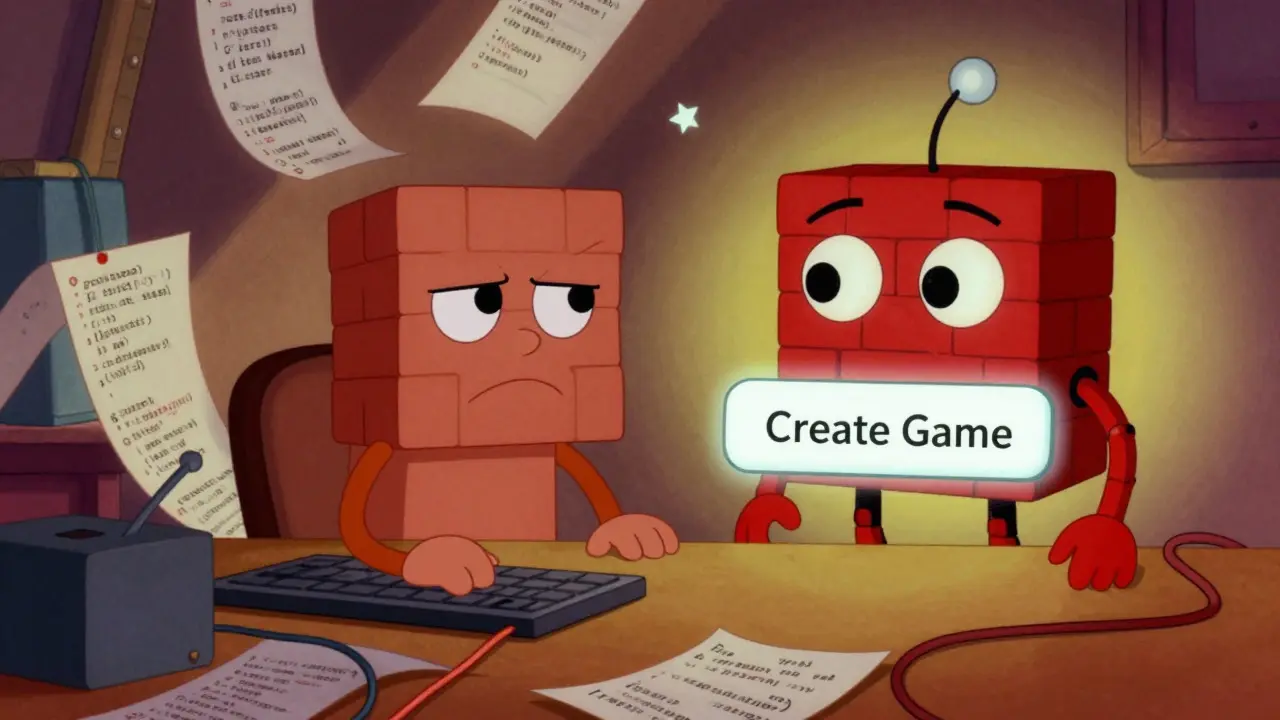
Have you ever wanted to build a video game but got stuck because you didn't know how to code? That is the exact problem Redbrick (BRIC) is trying to solve. It is not just another speculative coin; it is the utility fuel for an AI-powered platform that lets anyone create and monetize casual games on the blockchain. If you are looking at the ticker symbol BRIC and wondering if it is worth your time or money, you need to understand what the project actually does before you look at the price chart.
As of mid-2026, Redbrick operates as a micro-cap asset on the BNB Chain. This means it has high volatility, lower liquidity than major coins like Bitcoin or Ethereum, and significant potential for growth if its user base expands. But it also carries higher risk. In this guide, we break down what BRIC is, how the tokenomics work, and whether the technology behind it can deliver on its promises.
What Exactly Is Redbrick?
At its core, Redbrick is a Web3 content and gaming engine. Think of it as a bridge between traditional internet apps (Web2) and decentralized blockchain applications (Web3). The platform uses artificial intelligence to remove the technical barriers that usually stop non-programmers from building software. You do not need to learn complex coding languages. Instead, you use Redbrick’s AI tools to design, customize, and publish casual games.
The BRIC token is the native currency of this ecosystem. It is not designed to be a store of value like gold or a medium of exchange like the US Dollar. Its primary job is utility. Inside the Redbrick platform, BRIC handles several critical functions:
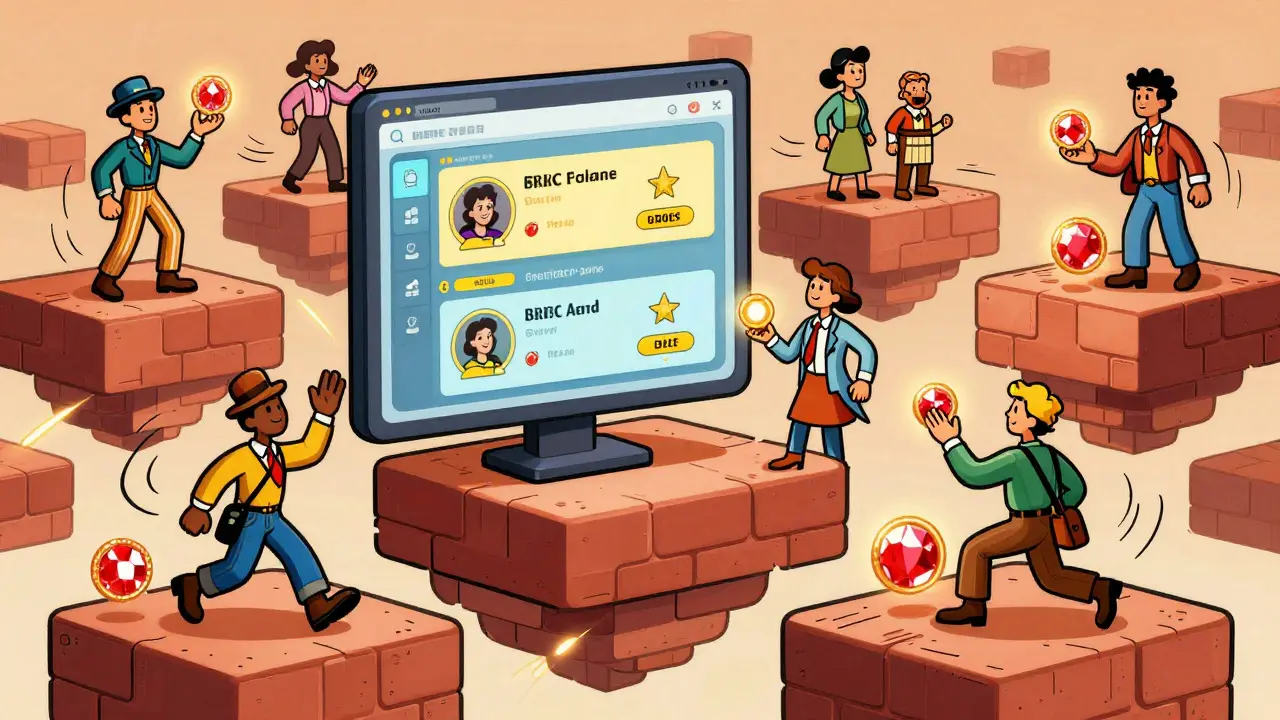
- Creator Monetization: Developers earn BRIC when users play their games or interact with their content.
- Platform Fees: Users pay small fees in BRIC to publish games or access premium features.
- Governance: Holders can vote on future updates and decisions regarding the platform's direction.
- Rewards: Players and early adopters receive BRIC as incentives for participating in the ecosystem.
This structure ensures that the token has a reason to exist beyond speculation. If people want to use the platform to make money or play games, they need BRIC. This creates organic demand, which is crucial for any long-term crypto project.
Technical Specs: BNB Chain and BEP-20
To interact with Redbrick, you need to understand where it lives. BRIC is a BEP-20 token built on the BNB Chain (formerly Binance Smart Chain). This is important for two reasons. First, transactions on BNB Chain are generally faster and cheaper than on Ethereum, which is essential for a gaming environment where users might make many small transactions. Second, it makes the token accessible to a wide range of wallets and decentralized exchanges already familiar to crypto users.
If you plan to buy or hold BRIC, you must use a wallet that supports BNB Chain assets, such as MetaMask or Trust Wallet. When transferring tokens, always double-check the contract address to avoid scams. The official contract address for BRIC is:
0xb40f2e5291c3Db45AbB0Ca8DF76F1C21E9f112a9
Any other address claiming to be Redbrick is likely a fake. Always verify this string of characters against official sources before sending funds.
Tokenomics: Supply and Scarcity
One of the most compelling aspects of BRIC’s design is its fixed supply. There will never be more than 1,000,000,000 (one billion) BRIC tokens. No new tokens can be minted. This hard cap is intended to protect holders from inflation, ensuring that the value of existing tokens is not diluted over time by endless printing.
However, having a billion tokens in existence does not mean all of them are available for trading right now. As of July 2026, the circulating supply sits around 235 million to 240 million BRIC. This means roughly 76% of the total supply is still locked up in various vesting schedules for teams, investors, and community rewards.
Here is how the initial allocation breaks down based on the project's documentation:
| Stakeholder Group | Allocation Percentage | Unlock Schedule |
|---|---|---|
| Early Investors | 6.3% | Vested over specific periods to prevent immediate dumping |
| Early Adopters | Dedicated Pool | 50% unlocked at TGE (June 2025), remaining 50% linearly over 10 months |
| Team/Ecosystem | Remaining Balance | 15% at TGE, rest linearly over 48 months (until ~June 2029) |
This staggered release is common in crypto projects. It prevents insiders from selling everything on day one, which would crash the price. However, it also means there is potential sell pressure in the future as these locks expire. Keep an eye on the vesting calendar, especially the four-year timeline for team allocations ending in 2029.
Price Performance and Market Status
Let’s talk about the numbers. As of late July 2026, BRIC trades in the sub-cent range, hovering around $0.0006 USD. With a circulating market capitalization of approximately $150,000 USD, Redbrick is classified as a micro-cap cryptocurrency. For context, top-tier gaming tokens often have market caps in the hundreds of millions or billions. BRIC is far below that threshold.
This micro-cap status comes with extreme volatility. You might see daily swings of 10%, 20%, or even 40%. For example, historical data shows BRIC dropped from nearly $0.01 shortly after its June 2025 launch to current levels. While this looks bad on paper, it is typical for early-stage projects finding their footing. The low trading volume-often under $10,000 per day on some trackers-means that even a relatively small buy order can spike the price significantly.
If you are considering investing, treat BRIC as a high-risk, high-reward asset. It is not suitable for conservative portfolios. The potential upside exists if the platform gains traction, but the downside risk is substantial due to low liquidity and thin order books.

Is Redbrick Legit? Assessing the Risks
How do you judge a project with no major institutional backing? Look at the product vision and the transparency of the team. Redbrick checks some boxes. The concept of AI-driven game creation is timely. The industry is moving toward tools that democratize development, and Redbrick positions itself squarely in that trend. The fact that it bridges Web2 and Web3 suggests an understanding that pure blockchain games often struggle with user acquisition.
However, there are red flags to watch. The lack of detailed public information about the founding team members is a concern for many investors. While the smart contract and token allocation are transparent on-chain, knowing who is building the product adds a layer of trust. Additionally, the absence of large-scale adoption metrics-such as daily active users or number of published games-makes it hard to validate the project's real-world utility right now.
Do not fall for hype. Check the official documentation regularly. Verify that the development roadmap is being followed. If the platform remains silent for months, that is a warning sign. Conversely, consistent updates and growing community engagement are positive indicators.
How to Buy and Store BRIC
If you decide to take the plunge, here is how you get started:
- Choose a Wallet: Download a BNB Chain-compatible wallet like MetaMask. Set the network to BNB Chain (BSC).
- Acquire BNB: You will need BNB (the native coin of the chain) to pay for gas fees when swapping tokens. Buy BNB on a centralized exchange like Binance or Coinbase and withdraw it to your wallet.
- Use a DEX: Go to a decentralized exchange like PancakeSwap. Connect your wallet.
- Skip the Swap: Paste the official BRIC contract address (`0xb40f...`) into the input field. Select BNB in the output field. Set your slippage tolerance (usually 1-3% is safe, but check current volatility).
- Confirm Transaction: Review the details and confirm the swap in your wallet.
Always start with a small amount to test the process. Never share your private keys or seed phrase with anyone.
What is the maximum supply of BRIC?
The maximum supply of Redbrick (BRIC) is permanently capped at 1,000,000,000 (one billion) tokens. No additional tokens can be minted, creating inherent scarcity within the ecosystem.
Which blockchain does Redbrick run on?
Redbrick is a BEP-20 token built on the BNB Chain. This allows for fast and low-cost transactions, which is ideal for gaming and micro-transactions.
Is BRIC a good investment in 2026?
BRIC is a high-risk, micro-cap asset. While the AI gaming narrative is strong, the token has low liquidity and high volatility. It should only be considered by investors who understand the risks of early-stage crypto projects and can afford to lose their capital.
What is the official contract address for BRIC?
The official BNB Chain contract address for BRIC is 0xb40f2e5291c3Db45AbB0Ca8DF76F1C21E9f112a9. Always verify this address before buying to avoid scam tokens.
How does Redbrick use AI?
Redbrick uses AI tools to simplify game development. Non-technical users can create, customize, and monetize casual games without needing to write code, lowering the barrier to entry for content creators.