What is Symbol (XYM)? A Guide to the Enterprise Blockchain and XYM Token

Jul, 5 2026
Remember when you bought NEM (XEM) back in the day? If you held onto it, you might have noticed something strange happening around March 2021. The original chain didn't just update; it effectively retired to make room for its child: Symbol, a new blockchain platform with the native token XYM. For many investors and developers, this shift was confusing. Was it a scam? A hard fork? Or a genuine technological upgrade?
The short answer is that Symbol is the spiritual and technical successor to NEM, designed specifically for businesses rather than just retail traders. It launched on March 15, 2021, offering existing NEM holders a 1:1 airdrop of XYM tokens. While the price has seen significant volatility since then-trading at a fraction of its all-time high as of mid-2026-the technology behind it remains distinct in the crowded crypto landscape. Unlike Ethereum or Solana, which rely on smart contracts written in complex coding languages, Symbol uses a different approach to handle digital assets. Let’s break down what Symbol actually is, how it works, and whether XYM still holds value today.
From NEM to Symbol: Why the Change?
To understand Symbol, you have to look at its parent project, NEM (New Economy Movement). Launched in 2015, NEM was one of the early blockchains focused on business use cases. However, by the late 2010s, the technology stack was aging. The team realized they couldn’t simply patch the old code to keep up with modern demands for speed and security. Instead, they built a completely new engine from scratch, codenamed "Catapult."
Rather than forcing a messy upgrade on the live NEM network, the NEM Group decided to launch a fresh chain. This allowed them to implement a cleaner architecture without breaking legacy applications. On March 15, 2021, the snapshot happened. If you had XEM in your wallet, you could opt-in to receive an equal amount of XYM. This migration tied the fate of the two projects together, but Symbol quickly established itself as the primary focus for future development, leaving NEM as a stable, read-only archive of sorts.
How Symbol Works: No Smart Contracts Needed?
This is where Symbol gets interesting. Most modern blockchains like Ethereum require developers to write "smart contracts" using languages like Solidity to create tokens or build applications. These contracts can be buggy, expensive to run, and hard to audit. Symbol takes a different path.
Instead of a Turing-complete virtual machine, Symbol uses a feature-rich protocol with built-in capabilities. Think of it less like a blank canvas where you paint everything yourself, and more like a pre-furnished house where the plumbing and electricity are already installed according to strict safety codes. Here are the core components:
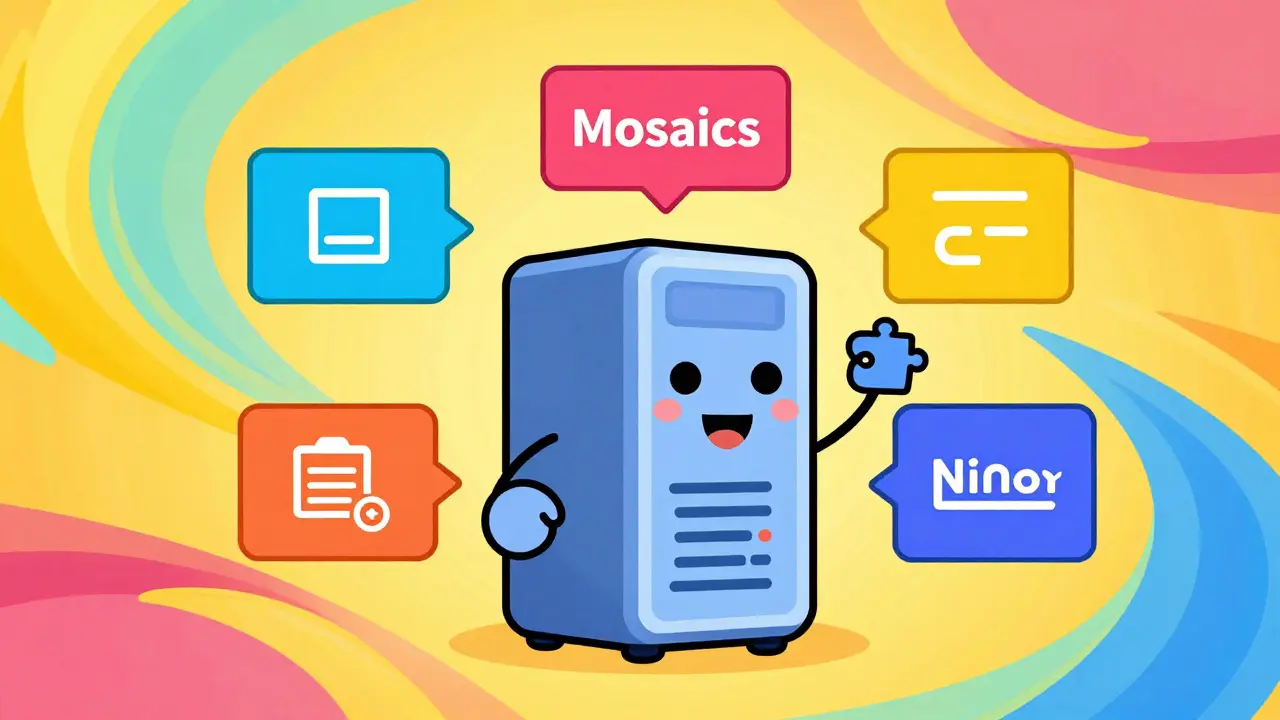
- Mosaics: These are customizable digital assets. You don’t need to write code to create a token. You define rules directly on the blockchain, such as supply limits, divisibility, and transfer restrictions. Mosaics can represent anything from loyalty points to real estate deeds.
- Namespaces: Imagine if every website address was a long string of random characters. Namespaces solve this by allowing human-readable names (like `mycompany.token`) to be registered on-chain. This makes assets easier to identify and trade.
- Multisignature Accounts: Security is huge for businesses. Symbol allows accounts to require multiple signatures to authorize a transaction. For example, a corporate treasury might need approval from three different executives before funds move. This is built into the protocol, not added via risky third-party apps.
- Aggregate Transactions: This is a killer feature for complex workflows. Aggregate transactions bundle multiple steps into one atomic action. If any part of the bundle fails, the entire transaction cancels. This prevents situations where money is sent but goods aren’t received, reducing counterparty risk significantly.
The underlying software, known as Catapult, is written in C++. This choice prioritizes performance and deterministic behavior, meaning the network behaves predictably under load-a critical requirement for enterprise clients who can’t afford downtime or unexpected fees.
The Consensus Mechanism: Proof-of-Stake-Plus
Symbol secures its network using a consensus algorithm called Proof-of-Stake-Plus (PoS+). If you’re familiar with standard Proof-of-Stake (PoS), you know that validators are chosen based on how much cryptocurrency they lock up (stake). PoS+ adds extra layers to this equation.
In Symbol, your chance of validating a block isn’t just about how much XYM you hold. It also depends on your "importance score," which factors in your activity level and contribution to the network economy. This encourages participants to actively facilitate transactions and maintain healthy nodes, rather than just hoarding tokens in a cold wallet. The goal is to reward those who keep the network running smoothly, creating a more resilient and decentralized infrastructure.
Tokenomics: Supply, Inflation, and Value
Let’s talk numbers, because that’s usually what keeps people up at night. The XYM token serves as the fuel for the network. You need it to pay transaction fees, stake for validation rewards, and secure the chain. But how many XYM are there, and will inflation eat away its value?
| Metric | Value / Detail |
|---|---|
| Maximum Supply | 8,999,999,999 XYM |
| Circulating Supply (Approx. 2026) | ~6.14 Billion XYM |
| Inflation Model | Tapering over ~100 years (Bitcoin-like curve) |
| All-Time High Price | $0.7262 USD (March 2021) |
| Recent Price Range (July 2026) | $0.0029 - $0.0049 USD |
The maximum supply is capped at nearly 9 billion tokens. At launch in 2021, about 7.84 billion were distributed to NEM holders. The remaining ~1.15 billion are reserved for future issuance, rewarding stakers and node operators over the next century. This creates a very slow, predictable inflation rate, similar to Bitcoin’s halving schedule but stretched out over a longer period. This design aims to provide stability for enterprises that need to budget for transaction costs years in advance.
However, the market reality has been harsh. As of July 2026, XYM trades significantly below its all-time high, reflecting broader crypto market cycles and the challenge of gaining mass enterprise adoption against giants like Ethereum and Hyperledger Fabric. While the technology is sound, the token’s price performance highlights the difference between technical merit and market sentiment.
Symbol vs. Ethereum: Which Is Better for Business?
You might wonder why a company would choose Symbol over Ethereum, which dominates the smart contract space. The answer lies in complexity versus simplicity.
Ethereum is incredibly flexible. You can build almost anything on it. But that flexibility comes with cost. Writing secure smart contracts requires specialized skills, and audits are expensive. Furthermore, Ethereum’s gas fees can spike unpredictably during high traffic. For a business trying to track supply chain items or issue simple loyalty tokens, this overhead is unnecessary.
Symbol offers a "batteries-included" experience. Features like multisig, namespaces, and asset creation are native. Developers interact with the blockchain via standard REST APIs, meaning they can use common programming languages like JavaScript, Python, or Java without learning a niche blockchain language. This lowers the barrier to entry for traditional IT teams. Additionally, Symbol supports hybrid architectures, allowing private company chains to anchor to the public Symbol network. This gives businesses data privacy while still benefiting from the security of the public ledger-a compromise that pure public chains struggle to offer.

How to Buy and Store XYM
If you’re interested in acquiring XYM, the process is straightforward, though liquidity varies by region. Since Symbol is listed on several centralized exchanges, you don’t need to deal with complex decentralized swap interfaces immediately.
- Choose an Exchange: Major platforms like MEXC, Gate.io, and regional favorites like bitFlyer (in Japan) or Zaif support XYM trading pairs, typically against USDT or JPY. Always check current listings, as exchange support can change.
- Create an Account: Complete the necessary KYC (Know Your Customer) verification steps required by the platform.
- Deposit Funds: Transfer fiat currency or another cryptocurrency to your exchange account.
- Execute Trade: Search for the XYM trading pair and place your buy order. Note that minimum purchase amounts may apply (e.g., starting from 100 JPY on some Japanese exchanges).
- Withdraw to Wallet: For better security, withdraw your XYM to a personal wallet. Hardware wallets like Trezor have supported Symbol in the past, but always verify current compatibility. Software wallets provided by the NEM/Symbol community are also options for active users.
Remember, holding XYM exposes you to market volatility. Only invest what you can afford to lose, and consider the long-term utility of the network rather than short-term price speculation.
Is Symbol Still Relevant in 2026?
The crypto world moves fast. With Layer 2 solutions on Ethereum and new competitors emerging, does Symbol still have a place? The answer is yes, but in a niche capacity. Symbol hasn’t gone mainstream in the way Ethereum did with DeFi and NFTs. Instead, it has carved out a steady role in enterprise-grade applications where reliability and low-code integration matter more than viral trends.
The continued maintenance of the Catapult codebase, regular API updates, and active developer documentation suggest the project is alive and well. It may not be the household name it once aimed to be, but for organizations needing a secure, efficient, and easy-to-integrate blockchain for asset tokenization or internal data sharing, Symbol remains a viable, technically robust option. Its future growth will likely depend on securing specific industry partnerships rather than chasing retail hype.
What is the relationship between NEM (XEM) and Symbol (XYM)?
Symbol is the direct successor to NEM. When Symbol launched in March 2021, holders of XEM could opt-in to receive a 1:1 airdrop of XYM. While both networks exist, Symbol is the active development chain, featuring updated technology (Catapult) and modern consensus mechanisms, whereas NEM serves primarily as a legacy archive.
Does Symbol use smart contracts?
No, Symbol does not use traditional Turing-complete smart contracts like Ethereum. Instead, it uses a protocol-based approach with features like Mosaics (customizable assets), Namespaces, and Aggregate Transactions. This design reduces the risk of bugs associated with custom code and simplifies development for business applications.
What is the maximum supply of XYM?
The maximum supply of XYM is capped at 8,999,999,999 tokens. Approximately 7.84 billion were distributed at launch to NEM holders, with the remainder allocated for future inflationary rewards to stakers and node operators over a 100-year period.
Can I mine XYM?
No, Symbol does not use Proof-of-Work mining. It uses Proof-of-Stake-Plus (PoS+). To earn rewards, you must stake XYM and run a node that contributes to the network's security and transaction processing. Rewards are based on your stake size and importance score.
Is Symbol suitable for building DeFi applications?
While possible, Symbol is not optimized for complex Decentralized Finance (DeFi) ecosystems like Ethereum or Solana. Its strength lies in enterprise asset management, supply chain tracking, and regulated token issuance. It lacks the vast library of composable smart contracts that drive DeFi innovation on other platforms.