What is ValiDAO (VDO) Crypto Coin? Guide to Tokenomics, Risks & How to Buy
Aug, 28 2026
Most people assume that if a crypto project claims to be "decentralized," it must have a massive community and deep liquidity. ValiDAO (VDO) is a DAO-owned, multi-chain proof-of-stake validator organization whose governance token trades on Ethereum. It’s the opposite of that. It’s a niche, micro-cap asset with a specific job: running bare-metal servers in Iceland to validate blockchains and sharing those fees with holders. If you’re asking what this coin actually does beyond the buzzwords, you’re in the right place.
This guide breaks down the real utility of VDO, the confusing supply data you’ll see across different trackers, and exactly how to buy it without getting stuck with an old contract version. We’ll look at the numbers from mid-2026 so you know where the price stands relative to its all-time high.
Quick Summary / Key Takeaways
- Core Function: VDO is the governance and incentive token for a validator collective that runs its own hardware infrastructure.
- Launch Model: Launched in December 2023 with a "fair launch"-no venture capital or private sales, with 90% of supply allocated to the community.
- Current Status (Aug 2026): The token trades primarily on Uniswap V2 (Ethereum) and HyperSwap (HyperEVM). Price hovers around $0.09-$0.10, significantly below its $2.72 peak.
- Liquidity Warning: Daily trading volume is low (often under $5,000), meaning large orders will cause significant slippage.
- Version Check: A migration from V1 to V2 occurred. Always verify you are using the active V2 contract address before swapping.
What Exactly Is ValiDAO?
To understand the token, you first need to understand the entity behind it. ValiDAO isn't just a software protocol; it's an organization of validators. In the world of Proof-of-Stake (PoS) blockchains like Ethereum, Solana, or Cosmos, validators secure the network by staking assets. Most users delegate their stake to large institutions or cloud-hosted nodes. ValiDAO takes a different approach by operating its own physical servers, specifically located in Iceland.
The VDO token serves two main purposes within this structure:
- Governance: Holders vote on which networks to support, how to distribute fees, and general treasury management.
- Incentives: When you delegate your native tokens (like ETH or ATOM) to ValiDAO’s validators, you earn standard staking rewards. Additionally, depending on the network, you may receive extra incentives paid out in VDO.
This positions VDO as an infrastructure play rather than a speculative meme. You aren't just buying a number on a screen; you're holding equity in a service that earns real transaction fees from securing blockchains. However, because the company is pseudonymous and operates via a DAO, there is no traditional corporate leadership team to call if things go wrong.
Tokenomics: The Supply Confusion Explained
If you check different crypto trackers, you might notice conflicting numbers for the total supply of VDO. This is a common issue with newer projects, but here is what the data suggests as of August 2026:
| Platform | Total/Max Supply | Circulating Supply | Note |
|---|---|---|---|
| CoinMarketCap | 11.69 Million | 11.69 Million | Indicates fully unlocked supply. |
| Coinlore | 11.6942 Million (Max) 10.00 Million (Total) |
~10.00 Million | Suggests a hard cap with some reserved tokens. |
| Bybit / Holder.io | 10.00 Million | Data Missing | Aligns with the lower cap figure. |
The discrepancy likely stems from the transition between the original V1 token contract and the current V2 version. Some platforms may still be indexing data from the older contract or interpreting the smart contract metadata differently. For most practical purposes, treat the circulating supply as roughly 10 million tokens, but always check the live contract on Etherscan for the definitive balance.
One key attribute to remember: VDO is an ERC-20 standard fungible token deployed on the Ethereum blockchain. It is not mineable. All new tokens are issued via smart contract operations, not through proof-of-work mining.
Price Performance and Market Reality
Let’s talk about the price, because the gap between the narrative and the market reality is wide. VDO hit an all-time high of $2.72 shortly after its launch in late 2023. By mid-August 2026, the price had settled around $0.0875 to $0.0995 USD. That is a drawdown of nearly 97%.
Why such a drop? Three factors are at play:
- Micro-Cap Volatility: With a Fully Diluted Valuation (FDV) hovering around $292,000 (based on Uniswap pool data), small sell-offs can crash the price. There isn't enough institutional money propping up the chart.
- Low Liquidity: The primary Uniswap V2 pool holds only about $6,300 worth of VDO and $6,300 worth of ETH. If you try to buy $1,000 worth of VDO, you could move the price by several percent instantly. This makes it risky for anyone looking to build a large position quickly.
- Market Rotation: As the broader crypto market matures, capital has flowed toward established Layer-1s and major DeFi protocols, leaving niche validator tokens in the long tail.
Daily trading volumes are typically in the low four figures (e.g., $5,600 on CoinGecko as of late August 2026). This means the order book is thin. Patience is required when entering or exiting positions.
How to Buy VDO in 2026
You won’t find VDO listed on major centralized exchanges like Binance or Coinbase for spot trading. While they show price pages, actual trading happens on Decentralized Exchanges (DEXs). Here is the step-by-step process to acquire VDO safely.
Step 1: Prepare Your Wallet
You need an Ethereum-compatible wallet. MetaMask is the standard choice. Ensure you have enough ETH in your wallet to cover both the cost of the VDO and the gas fees for the transaction. Gas prices on Ethereum fluctuate, so check current rates before you start.
Step 2: Verify the Contract Address
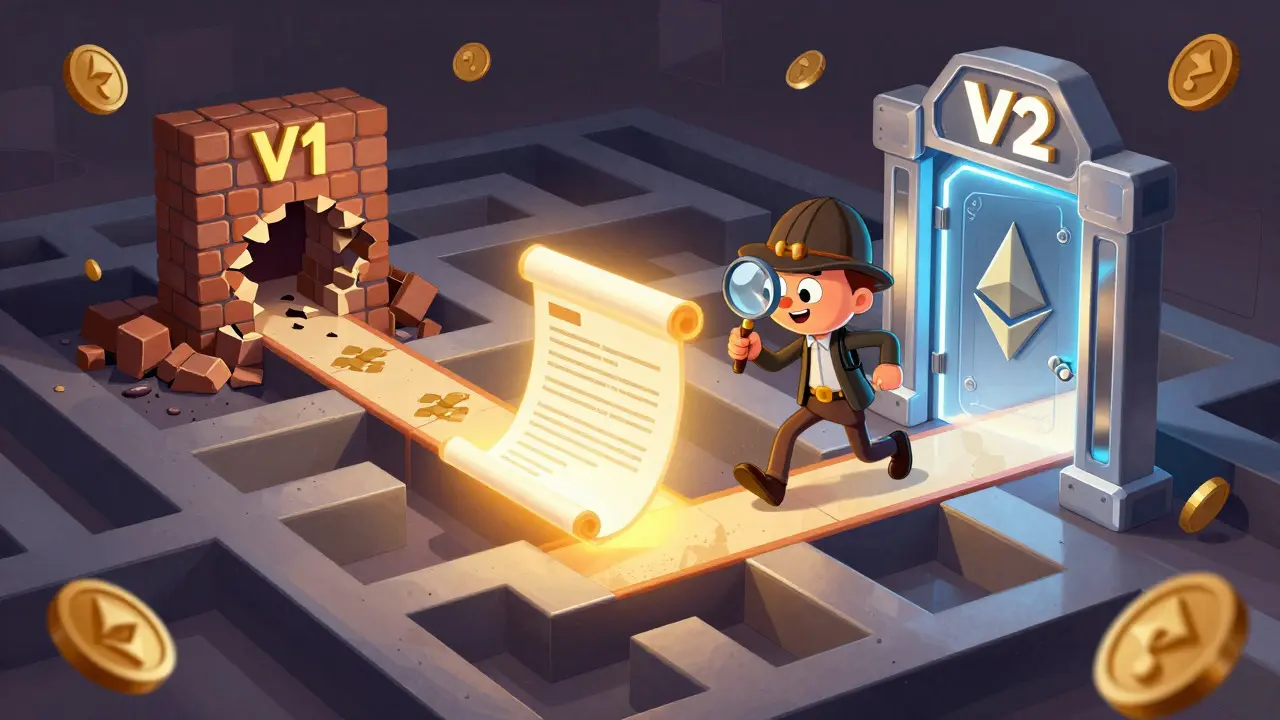
This is the most critical step. Because ValiDAO migrated from V1 to V2, using the wrong address will leave you with a legacy token that has no liquidity. Always copy the official V2 contract address from the project’s verified social channels or a trusted aggregator like Dexscreener. Do not guess the address.
Step 3: Execute the Swap
- Go to Uniswap V2 the primary decentralized exchange for Ethereum-based swaps.
- Connect your wallet.
- Select ETH as the "From" token and paste the VDO contract address into the "To" field.
- Review the slippage tolerance. Given the low liquidity, you may need to increase slippage slightly (e.g., 1-2%) to ensure the trade goes through, but don't set it too high or you risk a bad fill.
- Confirm the swap.
Alternatively, you can use HyperSwap on the HyperEVM chain if you prefer that ecosystem, but the Ethereum route via Uniswap remains the most liquid option.
Risks and Things to Watch Out For
Investing in a micro-cap token like VDO comes with specific risks that differ from buying Bitcoin or Ethereum.
- Liquidity Risk: As mentioned, the pools are small. Exiting a large position can be difficult without crashing the price further.
- Governance Opacity: Since the founders are pseudonymous and the DAO governs decisions, transparency can be limited. There is no public vesting schedule or detailed roadmap on mainstream aggregators. You have to trust the on-chain activity.
- Regulatory Uncertainty: Like all staking-related tokens, VDO faces potential regulatory scrutiny. Currently, it trades freely on DEXs, but rules in major jurisdictions regarding yield-bearing tokens could change.
- Smart Contract Risk: Although less likely for a simple ERC-20 token, any bug in the contract or the migration process could affect value. Always do your own diligence on the code if you are technically inclined.
Is VDO Right for You?
VDO is not a "set it and forget it" investment for the average retail trader. It appeals to a specific type of user: someone who believes in community-owned infrastructure, wants exposure to validator fees, and is comfortable navigating DEXs with thin liquidity. If you are looking for high-volume trading or easy entry via a centralized app, this might not be the right fit.
However, if you are interested in the fundamental story of decentralizing validation away from big tech clouds and into community-owned hardware, VDO offers a unique, albeit risky, entry point. Just keep your expectations realistic: it’s a high-risk, experimental micro-cap asset, not a blue-chip holding.
Where can I buy ValiDAO (VDO)?
VDO is primarily traded on decentralized exchanges. The main venues are Uniswap V2 on the Ethereum network and HyperSwap V3 on the HyperEVM chain. It is not currently available for spot trading on major centralized exchanges like Binance or Coinbase.
What is the difference between ValiDAO V1 and V2?
ValiDAO migrated its token contract from an initial version (V1) to a new one (V2). The V1 contract is now considered legacy. To participate in current governance and liquidity, you must hold the V2 token. Always verify the contract address before swapping to avoid ending up with the obsolete V1 token.
Does holding VDO give me staking rewards?
Holding VDO itself doesn't automatically generate passive income like a savings account. Instead, VDO gives you governance rights and eligibility for incentives. To earn staking rewards, you typically delegate your native tokens (like ETH) to ValiDAO's validators. You then earn the network's base rewards plus potential additional VDO incentives.
Is VDO a safe investment?
VDO is considered a high-risk, micro-cap asset. It has low liquidity, a small market cap, and has dropped significantly from its all-time high. It is suitable for experienced traders who understand DEX mechanics and are willing to accept volatility. It is not recommended for conservative investors.
What is the total supply of VDO?
Data varies by platform. Some sources list a maximum supply of 10 million VDO, while others cite 11.69 million. This discrepancy is likely due to the V1 to V2 contract migration. As of mid-2026, approximately 10 million tokens are recognized as circulating or issued.