BladeSwap Crypto Exchange Review: Is It Worth Your Time in 2026?

Sep, 5 2026
You’re scrolling through a niche forum or a Telegram group, and someone drops the name BladeSwap. They claim it’s the next big thing for low-cap altcoins, promising high yields and obscure tokens you can’t find on Binance or Coinbase. But here’s the problem: when you try to find hard data-fees, security audits, regulatory status-the trail goes cold. You are left wondering if this is a hidden gem or a liquidity trap.
This is the reality for many traders exploring smaller, decentralized platforms. BladeSwap isn’t a household name like Kraken or Crypto.com. It operates in the shadows of the major centralized exchanges (CEXs), often associated with the BLADE token ecosystem. If you are considering moving funds there, you need more than hype. You need facts about liquidity, user experience, and risk. Let’s break down what we know, what we don’t, and whether BladeSwap deserves a spot in your portfolio strategy for 2026.
The Identity Crisis: What Exactly Is BladeSwap?
First things first: BladeSwap exists in a confusing space. Is it a traditional Centralized Exchange (CEX) like Coinbase? Or is it a Decentralized Exchange (DEX) aggregator? The available data suggests it leans heavily toward being a DEX or a hybrid platform focused on the BLADE cryptocurrency asset.
Unlike giants that list thousands of coins immediately upon launch, BladeSwap appears to be more selective, possibly focusing on specific blockchain ecosystems where the BLADE token has utility. This specialization is a double-edged sword. On one hand, you might find early access to projects that haven’t hit the mainstream yet. On the other, you risk encountering thin order books. Thin order books mean that even a modest sell order can crash the price of the token you are holding because there aren’t enough buyers on the other side.
Recent discussions in crypto communities highlight that BladeSwap is often discussed alongside price predictions rather than operational reviews. For instance, analysts at SwapSpace have projected BLADE prices ranging from $0.01215 to $0.01628 for recent cycles, while MEXC Exchange offered more conservative estimates near $0.001195. These contradictory forecasts signal one thing: market sentiment around the underlying asset is unstable. When the asset’s value is volatile, the exchange hosting it must be rock-solid. If the exchange itself is new or under-regulated, that volatility becomes a liability, not an opportunity.
User Experience and Interface: Smooth Sailing or Rough Waters?
Let’s talk about the actual trading experience. A few user reviews on platforms like G2 mention a "good user-friendly interface" and praise the "speed and efficiency." This is encouraging. In the world of DeFi, clunky interfaces are the norm. Wallet connections fail, gas fees spike unexpectedly, and transaction confirmations take forever. If BladeSwap truly offers a streamlined UI, that’s a significant win for retail traders who get frustrated by complex Web3 mechanics.
However, "user-friendly" is subjective. For a beginner, simplicity means seeing a clear "Buy" button and a confirmed balance. For a pro trader, it means advanced charting tools, API access, and depth charts. Does BladeSwap offer these? Likely not. Most niche exchanges sacrifice advanced tools for simplicity. If you are day-trading with leverage, you will probably miss the robust analytics found on platforms like Bybit or Kraken. You are likely looking at a basic swap interface designed for holding or simple trading, not active scalping.
| Feature | BladeSwap | Kraken / Crypto.com |
|---|---|---|
| Asset Variety | Niche/BLADE-focused | 400+ cryptocurrencies |
| Regulatory Status | Limited/Regional | Fully Licensed (US/EU/AU) |
| Trading Tools | Basic Swap/UI | Margin, Futures, Advanced Charts |
| Liquidity Depth | Low to Medium | Very High |
| Customer Support | Community-driven/Limited | 24/7 Dedicated Teams |
The Regulatory Red Flags: Where Can You Actually Trade?
Here is the biggest hurdle for most readers: geography. User feedback explicitly states that BladeSwap "isn’t supported in many regions." This is a classic sign of a platform navigating complex global regulations. Major exchanges spend millions securing licenses in jurisdictions like the US, EU, and Australia. Smaller platforms often operate in grey areas, restricting users from countries with strict securities laws to avoid legal headaches.
If you live in New Zealand, the UK, or parts of Europe, check the Terms of Service before depositing. You might find that while you can view prices, you cannot withdraw fiat currency easily. Some niche exchanges only support crypto-to-crypto pairs. This means if you want to cash out to your bank account, you might have to swap your assets into Bitcoin or Ethereum first, then move them to a larger exchange to sell for dollars. That adds two extra steps, two sets of fees, and two points of failure.
Furthermore, the lack of widespread regulatory approval means less protection. If a major exchange like Coinbase goes bankrupt, there are often insurance funds or legal frameworks to help recover assets. With a smaller, less regulated entity, if the platform freezes withdrawals due to a technical glitch or a legal investigation, you might wait weeks or months for clarity. In crypto, time is money, and opportunity cost is real.
Security and Trust: The Black Box Problem
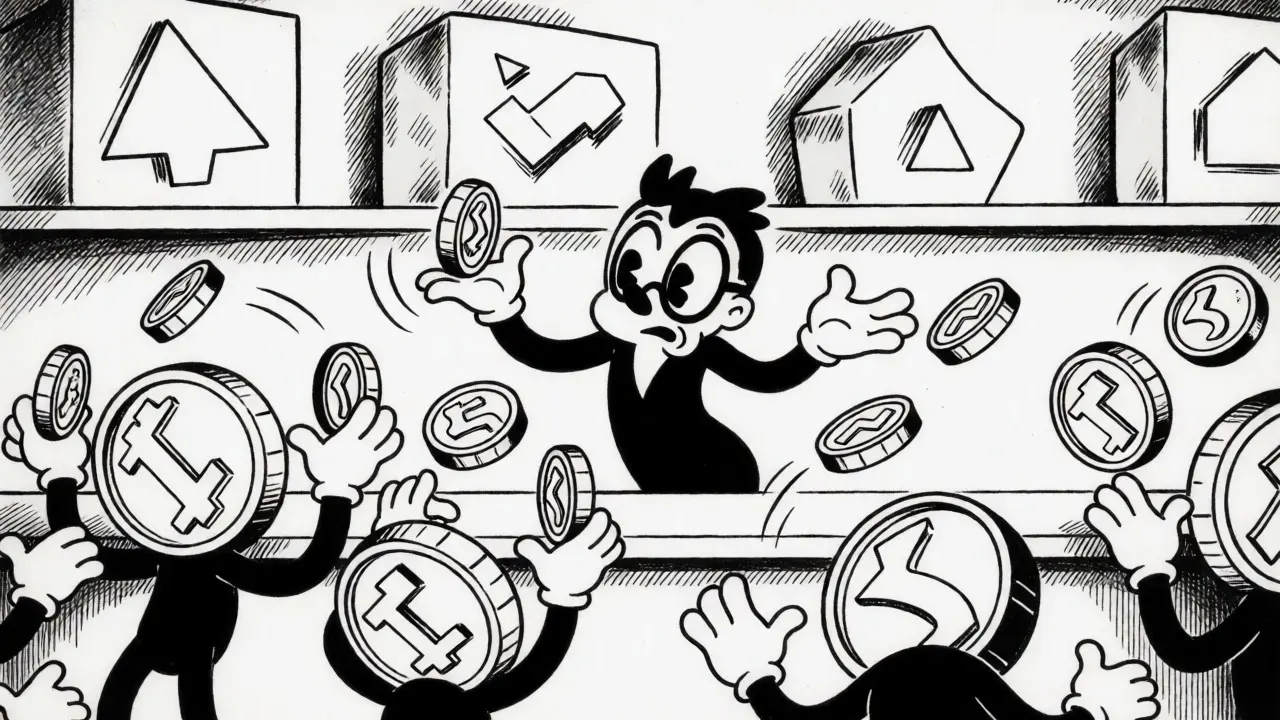
Security is non-negotiable. Yet, detailed information about BladeSwap’s security infrastructure is scarce. Do they use cold storage? Are their smart contracts audited by reputable firms like CertiK or Hacken? Without public audit reports, you are trusting the development team blindly.
Consider the history of similar niche exchanges. Many promise high APY (Annual Percentage Yield) on staking but fail to disclose how those yields are generated. Often, these yields come from inflationary token emissions rather than real revenue. This creates a "Ponzi-like" dynamic where early adopters profit from latecomers. If the BLADE token’s value drops-as some conservative predictions suggest-your staking rewards might not cover the capital loss.
A good rule of thumb for 2026: if you cannot find a recent third-party security audit, treat the exchange as high-risk. Never put more than 5-10% of your total crypto portfolio into a platform without verified security credentials. Diversification is your best defense against the unknown.
Fees and Hidden Costs: Reading the Fine Print
Smaller exchanges often lure users with "zero fee" trading or extremely low spreads. But look closer. How do they make money? Common hidden costs include:
- Withdrawal Fees: While trading might be free, withdrawing your tokens could cost significantly more than on a major exchange, especially if network congestion is high.
- Slippage: Due to lower liquidity, the price you see might not be the price you get. A 1% slippage tolerance might result in a 3% loss if the market moves quickly.
- Token Conversion Spreads: If you are swapping between minor altcoins, the spread (difference between buy and sell price) might be wider than advertised.
Always calculate the "total cost of exit." If you buy $1,000 worth of BLADE, trade it, and then want to cash out, subtract all fees. If you end up with $950, that’s a 5% effective loss. Compare that to a major exchange where fees might total 1%. The convenience of a niche platform must outweigh this financial drag.
Who Should Use BladeSwap?
So, is BladeSwap worth it? It depends entirely on your investor profile.
Use BladeSwap if:
- You are already invested in the BLADE token ecosystem and need a native place to stake or swap.
- You are hunting for micro-cap gems that aren’t listed on tier-1 exchanges yet.
- You are comfortable with higher risk and potential liquidity issues.
- You prefer a simpler, no-KYC (Know Your Customer) style interface, provided it’s available in your region.
Skip BladeSwap if:
- You need reliable fiat off-ramps (direct withdrawal to bank).
- You require advanced trading tools like stop-loss orders or margin trading.
- You are a large-volume trader who needs deep liquidity to enter/exit positions without moving the market.
- You prioritize regulatory peace of mind over potential yield chasing.
Final Verdict: Proceed with Caution
BladeSwap represents the wild west of cryptocurrency trading. It offers accessibility to niche assets but lacks the transparency and infrastructure of established players. The conflicting price predictions for its native token serve as a warning: the market hasn’t decided on its long-term value, which makes the platform hosting it equally uncertain.
If you decide to try it, start small. Treat it as a speculative playground, not your primary vault. Keep your main holdings on a secure, regulated exchange like Kraken or Crypto.com, and use BladeSwap only for the portion of your portfolio you are willing to lose or lock up for extended periods. In crypto, staying liquid is often more valuable than chasing the highest yield.
Is BladeSwap safe to use?
Safety is relative. BladeSwap lacks the extensive track record and public security audits of major exchanges like Coinbase or Binance. Users should assume higher risk due to limited transparency regarding fund custody and regulatory compliance. Always verify recent community feedback before depositing significant amounts.
Can I withdraw USD directly from BladeSwap?
Direct fiat withdrawals are often limited or unavailable on smaller niche exchanges. Many users report needing to swap assets into stablecoins (like USDT or USDC) and transferring them to a larger CEX to cash out to a bank account. Check the specific withdrawal options for your country in the platform's terms.
What is the BLADE token used for?
The BLADE token typically serves as the governance and utility token for the BladeSwap ecosystem. It may be used for paying reduced trading fees, participating in staking rewards, or voting on platform updates. Its value is closely tied to the adoption and success of the exchange itself.
Why are there so few reviews for BladeSwap?
BladeSwap is a smaller, niche platform compared to industry giants. Lower trading volumes mean fewer user interactions and thus fewer public reviews. Additionally, regional restrictions limit the user base, reducing the pool of people who can provide comprehensive feedback on the service.
Does BladeSwap require KYC verification?
KYC requirements vary by jurisdiction and platform policy. Some smaller exchanges allow anonymous trading for crypto-to-crypto pairs but require identity verification for fiat transactions or higher withdrawal limits. Always check the current compliance rules, as these change frequently in the crypto sector.