Cryptocurrency Mixing Services and North Korea Money Laundering

Apr, 1 2026
The digital world has evolved into a complex battlefield where privacy meets state-level finance. At the center of this storm is Cryptocurrency Mixing Services, which act as sophisticated anonymizers for digital assets. When paired with the illicit financial activities of nations like North Korea, these tools become high-stakes instruments for evading international sanctions. It is no longer just about hiding your personal spending habits; it is about navigating a minefield of global compliance regulations where one wrong transaction can trigger an automatic freeze on your assets.
How Cryptocurrency Mixers Actually Work
To understand the risk, you first need to know the mechanism. Think of a Cryptocurrency Mixer as a public pool at a massive swimming event. Thousands of swimmers jump in simultaneously, splash around in a chaotic manner, and then leave the pool at different times. If you were standing on the outside looking in, you could not reliably tell exactly who got in and who got out.
This process is technical, often called "tumbling" or "coin joining." Here is the breakdown:
- Pooling: Users send their cryptocurrency to the service provider. These funds are held in a temporary ledger separate from the public blockchain.
- Shuffling: The service mixes these incoming funds together. It breaks the link between the sender's address and the recipient's address.
- Distribution: After a set time delay or upon request, the equivalent amount of cryptocurrency (minus a fee) is sent to a new, unlinked address controlled by the user.
Technically, this obfuscates the Blockchain Traceability. On a transparent ledger like Bitcoin, every move is public. A mixer cuts that line of sight. While the technology itself is neutral-designed for privacy-the intent behind its use dictates its legality. In the right hands, it protects whistleblowers or businesses in hostile regimes. In the wrong hands, it becomes a weapon for financial crime.
The North Korea Connection
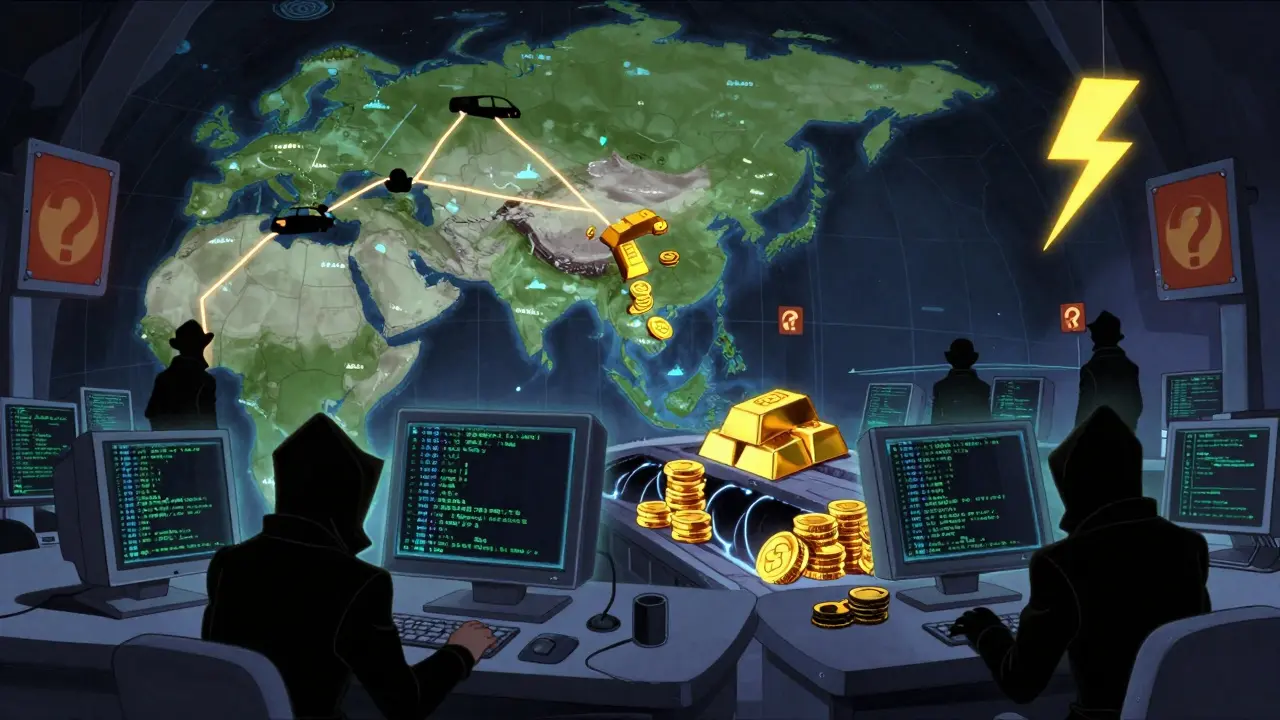
In the realm of cyber warfare, the Democratic People's Republic of Korea (DPRK) has established a notorious reputation for using cryptocurrency as a revenue stream. Because traditional banking channels are blocked by international sanctions, state-sponsored hacking groups like the Lazarus Group rely on digital assets to fund government operations.
The workflow typically follows a predictable pattern:
- Heist: Hackers breach a bridge platform, exchange, or wallet to steal millions in stablecoins or Bitcoin.
- Laundering Layer 1: Stolen funds are moved quickly through various addresses to spread the trail.
- Mixing: Funds enter a tumbler to sever the trace back to the stolen source.
- Cash Out: Cleaned funds are sold on over-the-counter markets or exchanged for other assets to bypass monitoring systems.
By 2026, financial intelligence units have grown extremely adept at spotting this pattern. The speed and volume of transactions entering a known mixing service are tell-tale signs of a "clean-up" operation following a major hack. The association is so strong that simply routing funds through certain decentralized protocols can flag your entire portfolio with compliance software used by banks and exchanges.
Sanctions and Legal Restrictions
Governments do not view this activity lightly. The United States Office of Foreign Assets Control (OFAC) has already set aggressive precedents, particularly with actions taken against smart contract-based mixers like Tornado Cash. In later years, regulatory bodies expanded these rules to include centralized tumbling services as well.
If you are operating under Western jurisdiction, interacting with sanctioned entities or tools is a federal offense. This creates a distinct category of risk for regular users:
| Action | Potential Consequence |
|---|---|
| Using a sanctioned mixer | Assets frozen by exchange; civil penalties |
| Receiving mixed funds | Bank account closure; KYC re-trigger |
| Trading near flagged addresses | De-platforming from major exchanges |
The danger lies in the concept of "contamination." Even if you are innocent, if your funds touch an address linked to North Korean cybertheft or pass through a blacklisted mixer, your legitimate wealth is tainted by association. Exchanges prioritize their own licenses over individual accounts, meaning they will freeze funds instantly upon receiving a warning from a blockchain analysis firm.
Privacy Coin vs. Mixing Services
Users often look for alternatives to mixers, turning to privacy-focused cryptocurrencies like Monero (XMR) or Zcash. While the goal is similar-obscuring transaction data-the mechanisms differ significantly.
Mixers require a third party to hold your funds temporarily, creating a custody risk. If the operator decides to steal the pooled funds, there is little recourse. Furthermore, because the mixer operates as a hub, law enforcement agencies target the operator directly. If the site gets shut down, user data might be seized and handed over to prosecutors.
Privacy coins, conversely, use cryptographic proofs to hide amounts and addresses on the chain itself. In 2026, many jurisdictions still debate whether holding privacy coins is illegal. However, the trend toward the "Travel Rule" (requiring exchanges to share user ID for transfers) has made off-ramping these coins increasingly difficult. Most regulated exchanges refuse to support deposits from privacy networks altogether, effectively cutting off the exit route to fiat currency.

Navigating Compliance Safely
For those managing portfolios, understanding the nuance between legitimate privacy and money laundering is essential. The simplest rule of thumb: avoid centralized services that promise anonymity. They rarely keep their promises and almost always collect metadata that identifies you.
Furthermore, verify the source of any funds you receive. In the post-2024 landscape, transparency layers have improved drastically. Many wallets now come equipped with built-in compliance engines that warn you before accepting a transaction from a high-risk node. Ignoring these warnings is a quick way to invite scrutiny.
If you suspect your funds have been exposed to a mixer or a questionable chain of custody, the proactive step is to move them immediately to a self-custody hardware wallet and stop moving them further. Any subsequent movement looks suspiciously like attempted laundering. Patience and distance from exchange hot wallets provide the best protection against accidental involvement.
Why This Matters Now
We are living through the era of "regulated anonymity." The early days of "set it and forget it" blockchains are fading. Financial institutions are demanding proof that money hasn't touched criminal enterprises. As global coordination improves, the definition of a "clean" coin is becoming binary. You either have a verifiable trail of ownership, or you are treated with suspicion.
The intersection of North Korea's cyber economy and private mixing tools highlights a grim reality: the same technology protecting individual sovereignty also empowers rogue states. For investors, the strategy isn't about avoiding regulation, but ensuring compliance to protect what they have earned.
Are all cryptocurrency mixers illegal?
Not necessarily, but many are de facto banned. It depends on the jurisdiction. However, utilizing a mixer on a platform sanctioned by OFAC or similar bodies is a federal crime in many regions.
Can authorities track mixed funds?
Yes. Advanced forensic tools analyze cluster patterns, entry timing, and network usage to correlate inputs and outputs, especially when combined with data from centralized on-ramps.
Does North Korea control specific mixers?
They utilize existing infrastructure rather than always hosting proprietary ones. Their hackers infiltrate exchanges and funneled stolen funds through public tumblers to obscure the origin before liquidation.
What happens if I receive funds from a mixer?
Your exchange account may be flagged. Banks can freeze assets, and future transactions requiring Know Your Customer checks will likely be rejected until cleared by compliance teams.
Is using CoinJoin safe?
It carries less custodial risk than centralized mixers since you never hand over private keys, but some CoinJoin nodes may be monitored or operated by entities violating sanctions.