Polkastarter Review 2026: Cross-Chain IDO Platform Analysis
May, 26 2026
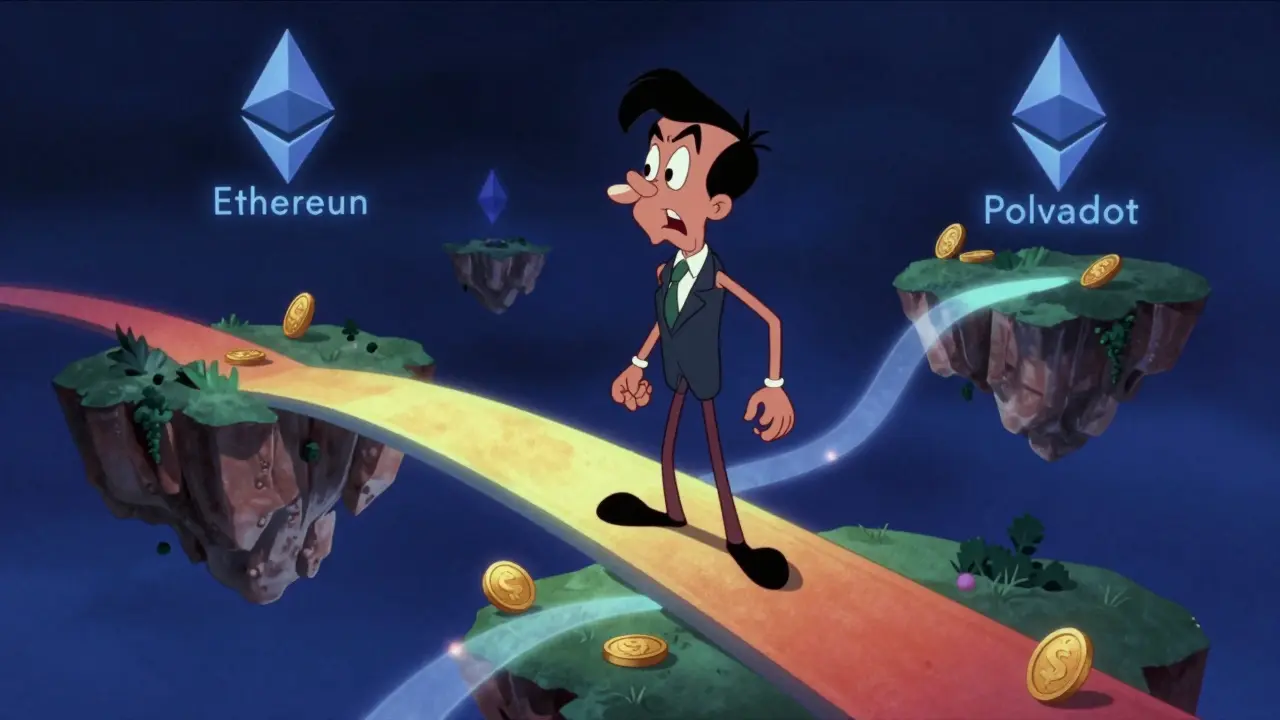
Most people think of exchanges as places to buy Bitcoin or Ethereum. But if you are looking for the next big thing before it hits major markets, you need a different tool. That is where Polkastarter comes in. It is not a standard exchange where you trade stocks. It is a decentralized platform built on the Polkadot network that helps new projects launch their tokens and lets users participate in those early sales. Think of it as a bridge between small, risky startups and investors who want in early.
The problem with most decentralized exchanges (DEXs) is that they are stuck on one blockchain. If you use Uniswap, you are mostly dealing with Ethereum assets. If you move to PancakeSwap, you are in the Binance Smart Chain world. Polkastarter tries to fix this by working across multiple chains at once. This review breaks down whether that promise holds up in 2026, how much it costs you, and if your money is safe.
What Is Polkastarter Really?
Launched in 2020 by Daniel Stocker, Pavel Bains, and Steve Foster, Polkastarter was designed to solve a specific headache: interoperability. In simple terms, it allows tokens from different blockchains to talk to each other. The platform uses the Substrate framework from Polkadot to create pools where these cross-chain swaps happen.
Unlike a centralized exchange like Coinbase, no single company holds your funds. Instead, smart contracts handle the transactions. As of late 2025, the protocol operates fully decentralized. Its native currency, the POLS token, sits at the center of everything. You do not just hold POLS; you use it to vote on changes, get fee discounts, and qualify for token sales.
The core value here is access. Polkastarter has facilitated over 187 Initial DEX Offerings (IDOs) since its inception. For a regular user, this means you can buy into a project days or weeks before it lists on bigger platforms. However, this early access comes with higher risk because these are unproven projects.
How It Works: Fees, Speed, and Costs
When you are trading crypto, two things kill your profits: high fees and slow speeds. Polkastarter claims to beat both. Let’s look at the numbers.
- Transaction Speed: Swaps typically take 2 to 3 seconds. This is fast enough for most retail traders who do not need millisecond precision.
- Gas Fees: Because it leverages networks like Polygon and BSC alongside Polkadot, fees are significantly lower than pure Ethereum trades. Data from Q2 2025 shows average fees around $0.12 per transaction, compared to nearly $2 during peak hours on Ethereum-based DEXs.
- Staking Benefits: If you stake 5,000 POLS tokens, you can reduce your platform fees by up to 50%. To gain voting rights in governance, you need to stake 10,000 POLS.
There is no minimum investment threshold to join, which makes it accessible. However, you need a compatible wallet like MetaMask or Polkadot.js. The setup takes about 12 minutes for a beginner, according to user testing data. The main hurdle is configuring your wallet to recognize multiple chains. If you have only ever used Ethereum, switching to Polygon or Avalanche within the same interface can feel confusing at first.
Security: Is Your Money Safe?
In decentralized finance, security is not about customer support picking up the phone. It is about code audits and treasury management. Polkastarter has taken steps to address this.
Their smart contracts are time-locked and were audited by CertiK, a leading security firm. Audit report #2022-045, published in January 2022, highlighted the robustness of their core architecture. Additionally, the team uses a multi-signature treasury system. This means moving large amounts of funds requires approval from five out of nine validators. No single person can drain the pool.
However, "secure" does not mean "risk-free." The biggest risk in using Polkastarter is not hacking; it is project failure. Remember the Project X IDO in June 2024? Liquidity providers pulled out within 15 minutes due to poor vesting schedules. The platform itself was secure, but the economics of the launched token collapsed. Always research the project, not just the platform.
| Feature | Polkastarter | Uniswap | Binance Launchpad |
|---|---|---|---|
| Network Support | 8+ Chains (Cross-chain) | Ethereum & Layer 2s | Binance Smart Chain |
| Avg. Fee | $0.12 | $1.85 (Peak) | Low (Centralized) |
| Liquidity Depth | ~$1.2M avg pool | High (Billions) | ~$47.8M avg launch |
| Access Model | Permissionless (Stake POLS) | Open | Invite/BNB Holders |
| Fiat On-Ramp | Limited (3 processors) | None (Crypto only) | Extensive (40+ methods) |

Pros and Cons: The Real User Experience
No platform is perfect. Here is what actual users and analysts are saying in 2025 and 2026.
The Good:
- Cross-Chain Freedom: You can swap assets between Ethereum, BSC, Polygon, Avalanche, Fantom, and Cronos without leaving the app. This saved one Reddit user $47 in gas fees during an Arbitrum airdrop event.
- User Interface: Rated 4.3 out of 5 on CryptoSlate’s UX comparison, the dashboard is cleaner than many older DeFi protocols.
- Cost Efficiency: Transactions are roughly 37% cheaper than ThorChain based on Q3 2025 benchmarks.
The Bad:
- Liquidity Issues: New tokens often suffer from low liquidity. Slippage can hit 8.7% in the first 24 hours after listing. This means if you try to sell immediately, you might get a worse price than expected.
- Support Delays: Customer support averages a 58-hour response time. In DeFi, you are largely on your own.
- Learning Curve: Managing wallets across different chains is complex. A significant portion of users (87%) have been in crypto for over two years. Beginners will struggle.
POLS Token Outlook and Market Position
The POLS token is the key to unlocking Polkastarter’s features. As of October 2025, it traded around $0.145 with a market cap of roughly $14.4 million. It is listed on major exchanges like Coinbase and Revolut, which adds legitimacy.
Analysts are divided on its future. Conservative estimates from Wallet Investor suggest modest growth to $0.15 by late 2025. More optimistic models from CoinLore predict a surge to nearly $60 if cross-chain adoption explodes. The truth likely lies in between. The token’s value depends entirely on the success of the projects launching on the platform. If Polkastarter becomes the go-to place for top-tier IDOs, POLS demand rises. If projects fail, sentiment drops.
Currently, Polkastarter holds about 0.08% of the $18.7 billion DEX market. It ranks #14 in unique users but #23 in volume. This suggests it has a loyal niche audience but lacks the mass-market traction of giants like Uniswap.

Future Roadmap: What’s Next?
The team is not standing still. The V3 upgrade, scheduled for Q1 2026, aims to integrate zero-knowledge proofs for better privacy. Later in 2026, they plan to introduce native staking and institutional-grade APIs. These moves signal a shift toward professional traders and larger entities, not just retail hobbyists.
However, regulatory risks loom. The SEC’s proposed Framework for Digital Asset Security Act in 2025 targets cross-chain bridges. If regulations tighten, Polkastarter may face hurdles in maintaining its multi-chain connectivity. Keep an eye on legal news, as it could impact the platform’s operations.
Final Verdict: Who Should Use Polkastarter?
If you are a beginner looking to buy Bitcoin and hold it for ten years, skip Polkastarter. Go to a centralized exchange like Coinbase or Kraken. They are simpler and safer for basic storage.
However, if you are an experienced crypto investor who understands gas fees, slippage, and smart contract risks, Polkastarter offers genuine value. It provides a cost-effective way to diversify across multiple blockchains and access early-stage projects. Just remember: the platform is a tool, not a guarantee. Do your own research on every IDO you join, stake your POLS wisely, and never invest more than you can afford to lose.
Is Polkastarter safe to use?
Polkastarter uses audited smart contracts and multi-signature treasuries, making the platform itself secure against hacks. However, the projects launched on it carry high financial risk. Always verify the audit status of individual IDOs before investing.
Do I need to stake POLS to use Polkastarter?
You do not need to stake POLS to make basic swaps. However, staking is required to participate in most IDOs, vote on governance proposals, and receive fee discounts. Staking 5,000 POLS gives you a 50% fee reduction.
Which blockchains does Polkastarter support?
As of 2025, Polkastarter supports eight major networks including Ethereum, Binance Smart Chain, Polygon, Avalanche, Fantom, Cronos, and Polkadot. This cross-chain capability is its main competitive advantage.
What are the fees on Polkastarter?
Average transaction fees are around $0.12, which is significantly lower than Ethereum-only DEXs. Fees vary depending on network congestion and the specific blockchain being used for the swap.
Can I buy POLS with fiat currency?
Polkastarter itself does not offer direct fiat on-ramps. However, you can buy POLS on centralized exchanges like Coinbase, Revolut, or Bitvavo using credit cards or bank transfers, then transfer it to your wallet.