Blockchain Gaming: What It Is, How It Works, and What You Need to Know
When you hear blockchain gaming, a type of video game that uses blockchain technology to give players real ownership of in-game items. Also known as crypto gaming, it turns your skins, weapons, or characters into digital assets you can sell, trade, or move across games—unlike traditional games where everything vanishes when you stop playing. This isn’t just about fancy graphics or hype. It’s about shifting power from game companies to players. If you’ve ever spent hours grinding for a rare sword, only to lose it when the server shut down, blockchain gaming fixes that.
At its core, blockchain gaming relies on NFTs in games, unique digital tokens that prove ownership of a specific in-game item. These aren’t just pictures—they’re verifiable, tamper-proof records stored on a public ledger. Think of them like digital deeds for your virtual gear. Then there’s play-to-earn, a model where players earn cryptocurrency by playing, completing tasks, or winning matches. It sounds too good to be true—and sometimes it is. Many projects promise big payouts but deliver nothing. The real ones? They tie rewards to actual gameplay, not just buying tokens. You don’t just play to win—you play to own.
What makes this different from regular online games? In traditional games, the company owns everything. In blockchain games, you do. That means if a game gets shut down, your NFTs still exist. You can list them on marketplaces, trade them with others, or even use them in other games built on the same network. It’s like owning a house instead of renting an apartment. But it’s not all smooth sailing. Many blockchain games are still clunky, expensive to start, and full of scams. You’ll see tons of fake airdrops and worthless tokens—like the ones in the posts below—that promise riches but vanish overnight. The key is to look for games with real utility, active communities, and transparent tokenomics.
There’s also the issue of hardware and costs. Running a validator node for some blockchains? That’s a whole other level. But for most players, all you need is a wallet and a decent internet connection. The real challenge isn’t tech—it’s telling the good projects from the garbage. That’s why you’ll find reviews here on exchanges like BitBlinx and Bitsoda that turned out to be scams, and real guides on how to spot legit NFT drops and token rewards. You’ll learn why some games fail because they don’t have enough players, not because the tech is broken. And you’ll see how blockchain social networks and user data control tie into this—because if you’re owning your assets, you should own your identity too.
Blockchain gaming isn’t the future. It’s already here. But it’s messy, unpredictable, and full of traps. The posts below cut through the noise. You’ll find honest reviews of platforms, breakdowns of tokens like BAKE and PENGU, and clear warnings about fake airdrops. No fluff. Just what works, what doesn’t, and how to protect your time and crypto while playing.
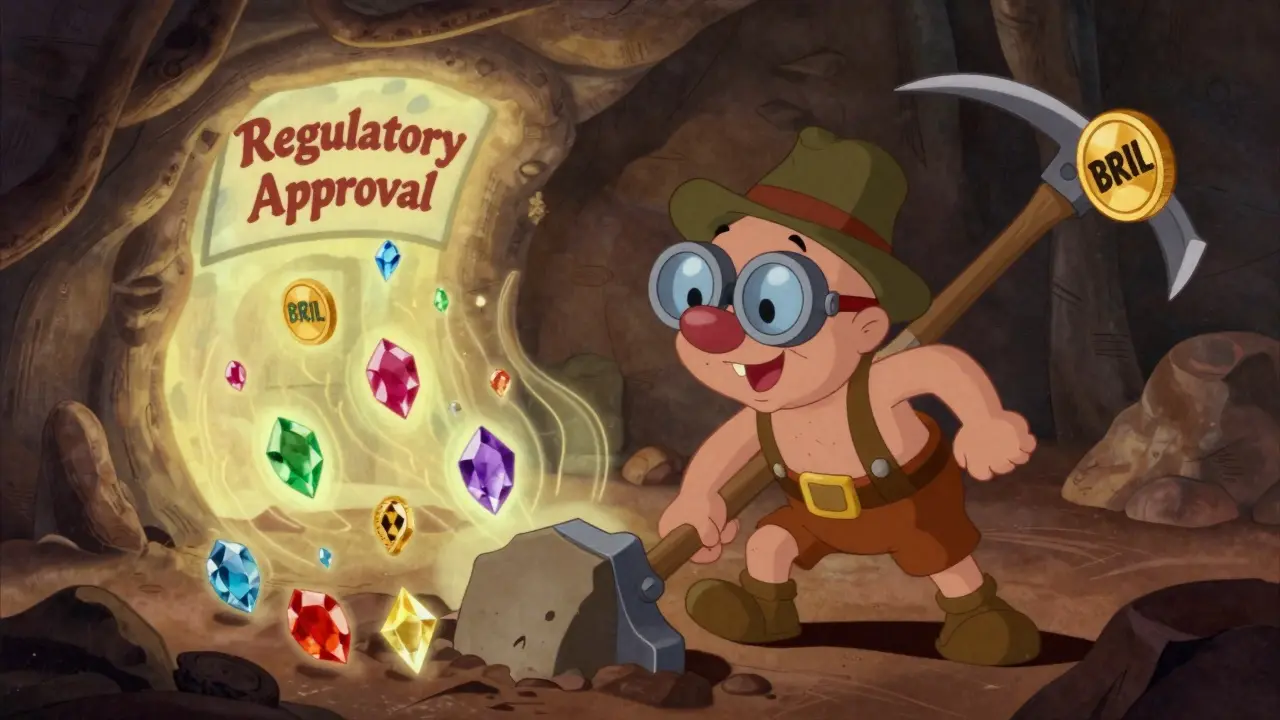
What is Brilliantcrypto (BRIL) Crypto Coin? A Complete Guide to the Blockchain Gaming Token
Caius Merrow Dec, 4 2025 0Brilliantcrypto (BRIL) is a blockchain gaming token that lets players earn crypto by mining digital gemstones. Built on Polygon, it combines fun gameplay with real economic value and regulatory compliance, setting it apart from failed Play-to-Earn projects.
More Detail