Verifiable Credentials with DID: A Practical Guide to Digital Identity
Jul, 8 2026
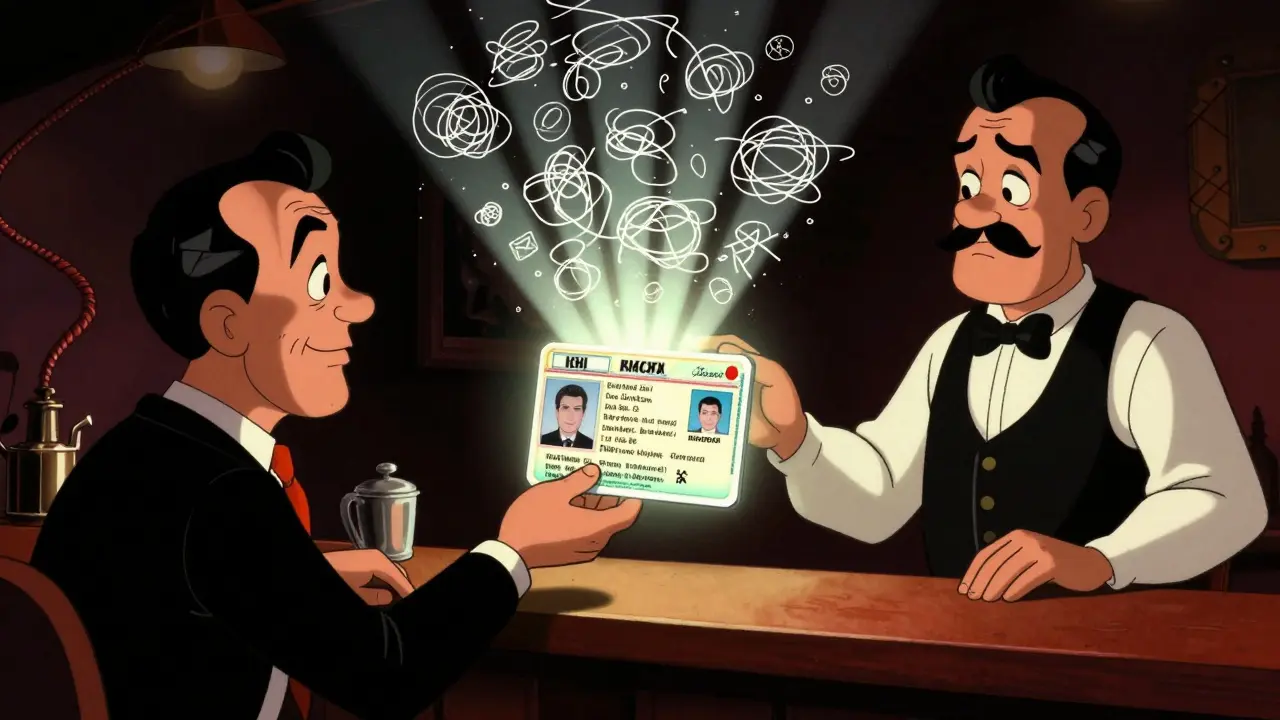
Imagine walking into a bar. You hand over your driver’s license to prove you are old enough to drink. The bartender glances at it, sees your name, address, and photo, then hands it back. Did you really need to share all that personal data just to buy a beer? Probably not. Yet, this is how most of our digital lives work today. We surrender massive amounts of private information-emails, passwords, birthdates, even social security numbers-just to access basic services.
This problem has plagued the internet since its inception. Centralized databases hold our secrets, making them prime targets for hackers. When those databases get breached, we pay the price. But there is a better way. It involves two technologies working together: Verifiable Credentials (VCs) and Decentralized Identifiers (DIDs). This framework, standardized by the World Wide Web Consortium (W3C), allows you to prove who you are without handing over your entire life story. It shifts control from big tech companies back to you.
The Core Problem with Current Digital Identity
To understand why Verifiable Credentials matter, you first have to look at what is broken in the current system. Right now, your digital identity is fragmented. You have one password for your email, another for your bank, and yet another for your social media. If one site gets hacked, attackers often try those same credentials elsewhere. This is called credential stuffing, and it works because people reuse passwords.
More importantly, centralized authorities own your identity data. When you log in with Google or Facebook, those companies track your behavior across the web. They build profiles on you to sell ads. You don't own that profile; they do. If they decide to ban you, you lose access to parts of your digital life. There is no portable, user-controlled identity layer on the modern web. That changes with decentralized identity protocols.
What Are Decentralized Identifiers (DIDs)?
Let's start with the foundation: the DID. A Decentralized Identifier (DID) is a new type of identifier that enables verifiable, decentralized digital identity. Unlike traditional usernames, which are issued by a central server (like Twitter or Amazon), a DID is created and controlled by you. No registration authority is needed.
A DID looks something like this: did:example:123456789abcdefghi. The prefix did: tells the system it is a decentralized identifier. The method example defines how the DID is resolved (more on methods later). The suffix is the unique ID itself. Crucially, every DID points to a DID Document (a JSON-LD document containing cryptographic keys and service endpoints). This document proves who controls the DID. It holds your public key, which allows others to verify signatures made by your private key. You keep the private key secret; everyone else uses the public key to check your work.
DIDs can be stored on various ledgers. Some use blockchains like Ethereum or Bitcoin. Others use distributed hash tables (DHTs) or even simple web servers (via did:web). The point is that no single entity can revoke your DID unless you choose to let them. This creates true self-sovereign identity.
Understanding Verifiable Credentials (VCs)
If DIDs are the handles, Verifiable Credentials are the actual proof. A VC is a tamper-evident digital statement issued by a trusted authority. Think of it as a digital diploma, a passport, or a professional certification. But unlike a PDF that can be photoshopped, a VC is cryptographically signed.
Here is how it works in practice. Let's say a university issues you a degree. Instead of mailing you a paper certificate, they issue a VC. This credential contains claims about you: your name, the degree earned, the date of graduation, and the university's signature. Because the university signs it with their private key linked to their DID, anyone can verify that the university actually issued this credential. They do this by checking the signature against the university's public DID Document. If the signature matches, the credential is valid. If someone tries to change "Bachelor" to "Master," the signature breaks, and the verification fails instantly.
The W3C Verifiable Credentials Data Model v2.0 defines the structure of these credentials. It ensures that VCs from different issuers can be understood by different verifiers. This interoperability is key. Without it, we would just have proprietary silos again. With it, a VC from a hospital in New Zealand could potentially be verified by an insurance company in Japan, provided both systems support the standard.
The Three Roles: Issuer, Holder, and Verifier
To make sense of the ecosystem, you need to know the three main actors. This model separates concerns and enhances privacy.
- The Issuer: This is the entity that creates the credential. Examples include universities, governments, employers, or banks. The issuer signs the VC using their DID. They establish trust. For example, MIT is a trusted issuer for computer science degrees. A random blog is not.
- The Holder: This is you. You receive the VC and store it in a digital wallet. You decide when to share it and with whom. You hold the private keys associated with your DID, giving you full control. You are the gatekeeper of your own identity.
- The Verifier: This is the party requesting proof. It could be a bar checking your age, an employer verifying your skills, or a bank confirming your income. The verifier checks the cryptographic signature and the revocation status of the VC. They do not need to contact the issuer directly, which speeds up the process and reduces load on the issuer's systems.
This separation is powerful. In the traditional model, the verifier (the bank) calls the issuer (your employer) to confirm your job. In the VC model, you present a signed credential from your employer. The bank verifies it mathematically. No phone call needed. No human error. No delay.
How the Technology Works Under the Hood
The magic happens through cryptography and decentralized networks. When a VC is issued, it binds the claims to the holder's DID. This binding is done via a digital signature. The issuer calculates a hash of the credential data and encrypts it with their private key. This encrypted hash is the signature. Anyone with the issuer's public key (found in their DID Document) can decrypt the signature and compare it to the hash of the received data. If they match, the data hasn't been altered.
But what if the credential needs to be revoked? Say you lose your wallet, or a university retracts a degree due to fraud. The system needs a way to mark a VC as invalid. This is where the Revocation Layer comes in. Common methods include Status Lists (bitstrings stored on a server or blockchain) or Blockchain Anchoring (recording revocation events on-chain). When a verifier checks a VC, they also check its revocation status. If the bit corresponding to that VC is set to "revoked," the verification fails.
Privacy is another critical component. Traditional systems force you to reveal everything. VCs enable Selective Disclosure and Zero-Knowledge Proofs (ZKPs). With ZKPs, you can prove a statement is true without revealing the underlying data. For example, you can prove you are over 18 without revealing your exact birthdate. You can prove you have a valid driver's license without showing your home address. This minimizes data exposure and reduces the risk of identity theft.
Comparison: VCs vs. Traditional Methods vs. NFTs
| Feature | Traditional Passwords/Centralized IDs | NFTs (Non-Fungible Tokens) | Verifiable Credentials + DIDs |
|---|---|---|---|
| Control | Centralized provider owns data | User owns token, but metadata may be off-chain | User fully controls identity and data |
| Privacy | Low; providers track activity | Low; transactions are public on blockchain | High; supports selective disclosure and ZKPs |
| Verification | Requires contacting central server | Blockchain confirms ownership, not content truth | Cryptographic proof; no central server needed |
| Revocability | Provider can disable account anytime | Cannot revoke ownership once minted | Issuer can revoke credential via status list |
| Use Case | Login, basic authentication | Digital art, collectibles, gaming assets | Identity, credentials, compliance, KYC |
Notice the distinction between NFTs and VCs. People often confuse them because both use blockchain-like technology. However, an NFT proves you own a specific token. It does not prove that the person who owns the token is who they claim to be, nor does it prove the truthfulness of any claims attached to it. A VC proves the truth of a claim (e.g., "I am licensed to practice medicine") and links it securely to your identity. You might use an NFT to display a VC visually, but the VC itself is the source of truth.
Real-World Use Cases in 2026
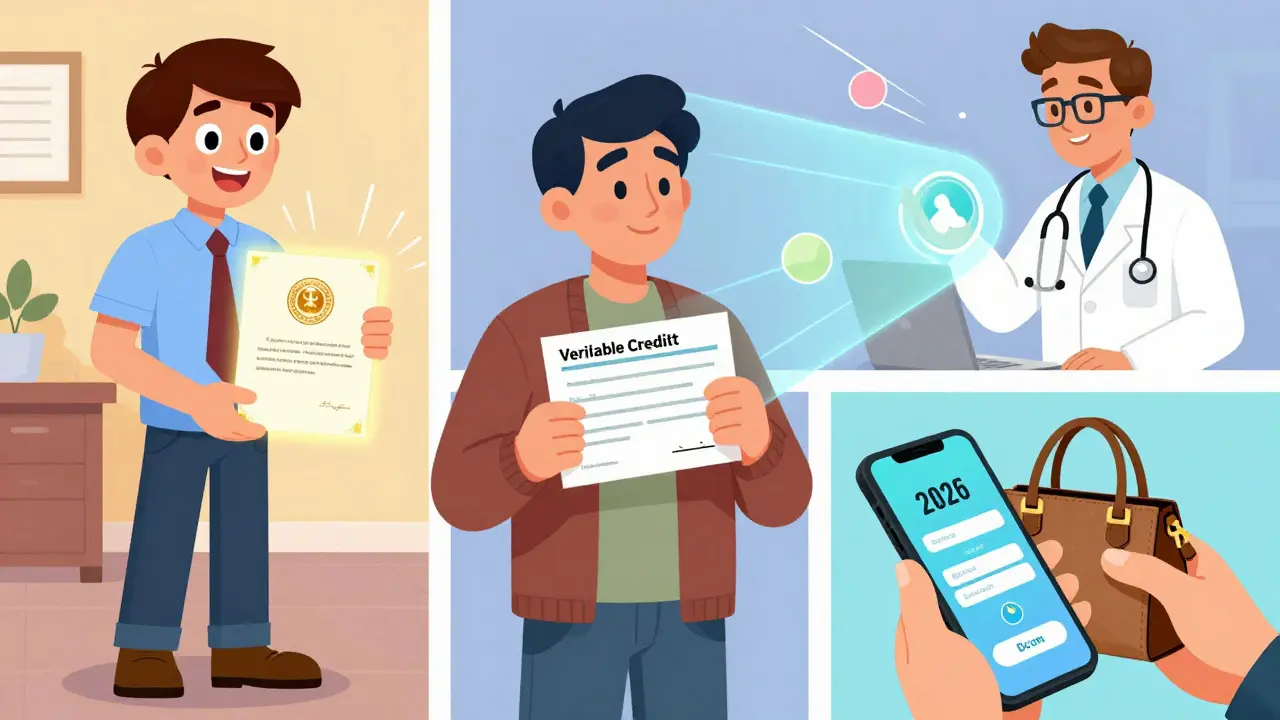
By mid-2026, several industries are actively deploying Verifiable Credentials. Here is where you will see them in action.
Education: Universities are moving away from paper diplomas. Students receive VCs upon graduation. Employers can verify degrees instantly without waiting weeks for background checks. This speeds up hiring and eliminates fake resumes.
Healthcare: Patients can store medical records as VCs. When visiting a specialist, they grant temporary access to their history. The specialist verifies the data came from a legitimate hospital without needing to fax records. This improves care coordination and patient privacy.
Financial Services (KYC): Know Your Customer (KYC) processes are slow and repetitive. Every time you open a new bank account, you upload your ID again. With VCs, you complete KYC once with a trusted provider. You then carry that VC in your wallet. Future banks verify the existing VC instead of re-collecting your documents. This saves time and reduces fraud.
Supply Chain: Companies use VCs to certify product authenticity. A luxury brand can issue a VC for each handbag. Buyers scan a QR code to verify the bag is genuine and view its provenance. This combats counterfeiting effectively.
Challenges and Adoption Barriers
Despite the benefits, widespread adoption faces hurdles. First, complexity. Implementing DIDs and VCs requires understanding cryptography, JSON-LD, and decentralized storage. Developers need robust libraries and tools. While frameworks like Aries Framework (an open-source toolkit for building secure messaging and identity apps) help, the learning curve remains steep for non-technical teams.
Second, user experience. Managing private keys is risky. If users lose their keys, they lose their identity. Wallet providers must create intuitive interfaces that abstract away the cryptography while maintaining security. Biometric login and social recovery mechanisms are being developed to address this.
Third, legal recognition. Governments need to recognize VCs as legally binding equivalents to physical documents. While some countries are updating laws, many still require wet-ink signatures or notarized copies. Regulatory clarity is essential for mass adoption.
Getting Started with Verifiable Credentials
If you want to experiment with VCs and DIDs, here is a practical path forward.
- Choose a DID Method: Start with
did:webif you want simplicity. It allows you to host your DID Document on your own website. No blockchain fees required. For production-grade decentralization, considerdid:ion(based on Indy Network) ordid:key(for ephemeral identities). - Select a Credential Format: JSON-LD is the W3C standard and offers rich semantic context. JWT (JSON Web Tokens) is simpler and integrates easily with existing web APIs. Choose based on your integration needs.
- Build or Use a Wallet: You need a place to store your VCs and manage your keys. Open-source options include SpruceID (a developer-friendly SDK for building verifiable credential wallets) or Microsoft ION.
- Issue a Test Credential: Create a simple VC, such as a "Verified Email" credential. Sign it with your organization's DID. Share it with a test verifier.
- Verify and Iterate: Check the signature and revocation status. Experiment with selective disclosure to hide unnecessary fields.
The ecosystem is growing rapidly. Standards bodies like W3C continue to refine the specifications. As more institutions adopt VCs, the network effect will kick in, making decentralized identity the default rather than the exception. The future of the web is not just about connecting computers; it is about connecting trusted identities. Verifiable Credentials and DIDs provide the infrastructure for that future.
What is the difference between a DID and a username?
A username is issued and controlled by a central service provider (like Google or Facebook). If that provider bans you, you lose your username. A DID (Decentralized Identifier) is created and controlled by you. It exists independently of any central authority, giving you permanent ownership and portability across different platforms.
Do Verifiable Credentials require blockchain?
Not necessarily. While DIDs can be anchored on blockchains for maximum decentralization, they can also be hosted on regular web servers (did:web) or other distributed networks. The VC itself is a digital file signed with cryptography. Blockchain is optional for storage but often used for anchoring trust and managing revocation lists transparently.
How do Verifiable Credentials protect my privacy?
VCs support selective disclosure and zero-knowledge proofs (ZKPs). This means you can prove specific facts (like being over 18) without revealing the underlying data (your exact birthdate). You only share the minimum necessary information, reducing the risk of identity theft and unwanted tracking.
Can a Verifiable Credential be faked?
It is extremely difficult. VCs are cryptographically signed by the issuer. Any alteration to the data breaks the signature, causing verification to fail. To fake a VC, an attacker would need the issuer's private key, which is kept secret. The security relies on standard cryptographic algorithms like SHA-256 and ECDSA.
What happens if I lose my private key?
If you lose your private key, you lose access to the DIDs and VCs associated with it. This is a significant risk in decentralized systems. Solutions include multi-signature setups, social recovery mechanisms (where trusted contacts help restore access), and hardware wallets to secure keys physically. Always backup your seed phrases securely.