What is Moonlander (FM) Crypto Coin? Full Guide to the Cronos DeFi Token

Nov, 6 2026
Ever wondered how you can trade Bitcoin with 1,000x leverage without leaving the Cronos blockchain ecosystem? That’s the core promise of Moonlander, a decentralized perpetual exchange that lets users bet on price movements of crypto and real-world assets. But what powers this machine? The answer lies in its native token: FM (also known as Full Moon). If you’re looking at FM, you’re not just buying a coin; you’re buying into a specific slice of protocol revenue and governance rights within a high-speed, high-risk trading environment.
This guide breaks down exactly what FM is, how it generates value, and why the data surrounding it requires careful scrutiny. We’ll cut through the jargon to explain the staking mechanics, the unique reward system involving CM tokens, and the critical risks involved in holding a token tied to a single protocol’s performance.
The Core Function: Governance and Revenue Sharing
At its heart, FM is not a payment coin like Bitcoin or Ethereum. It doesn’t facilitate peer-to-peer transfers for buying coffee. Instead, FM functions as a governance and utility token for the Moonlander protocol. Think of it less as currency and more as a membership pass that grants you two main benefits: voting power over protocol changes and a share of the fees generated by traders.
When traders open or close positions on Moonlander, they pay fees. A significant portion of these fees flows back to FM holders who have chosen to stake their tokens. This creates a direct economic link between the platform’s usage volume and the token’s yield potential. If Moonlander sees massive trading activity, FM stakers earn more. If volume dries up, yields drop. It’s a straightforward model, but one that makes FM highly sensitive to market sentiment and user adoption rates.
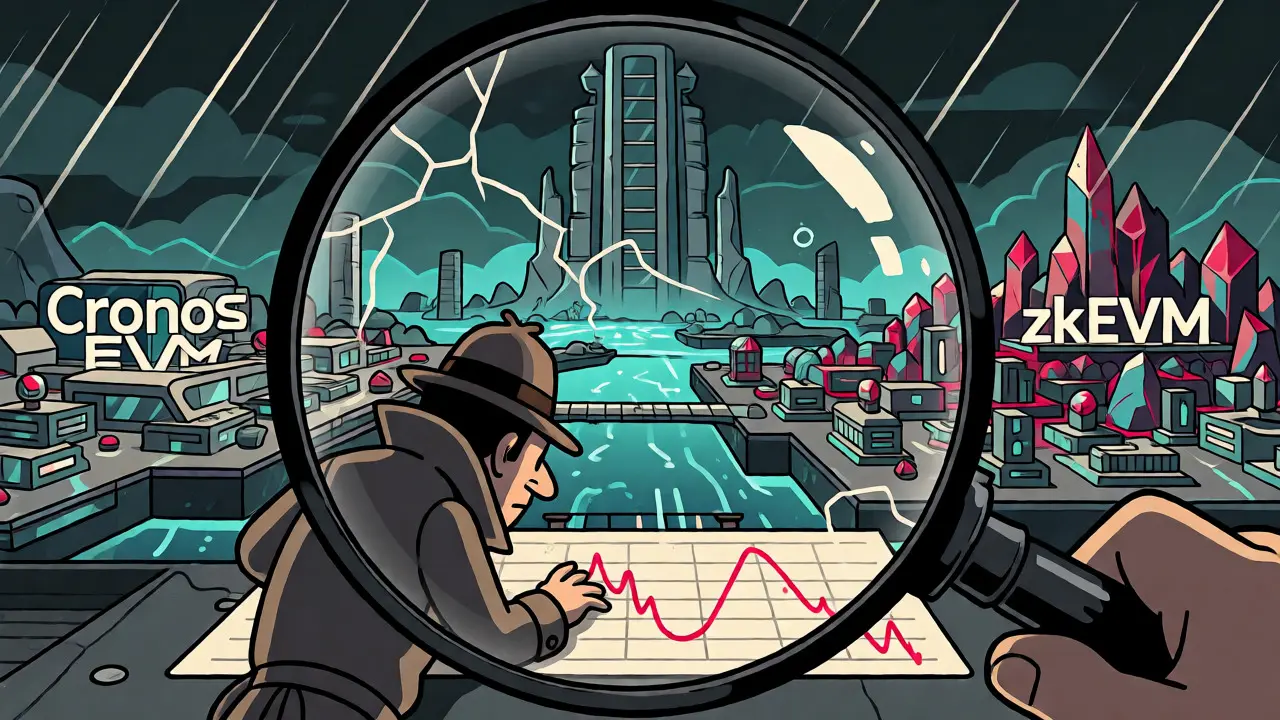
The protocol operates on both Cronos EVM and Cronos zkEVM. This dual-deployment strategy aims to capture liquidity from different segments of the Cronos ecosystem, leveraging the speed of zero-knowledge proofs for some operations while maintaining compatibility with standard Ethereum Virtual Machine tools for others.
How Staking Works: The CM Reward Mechanism
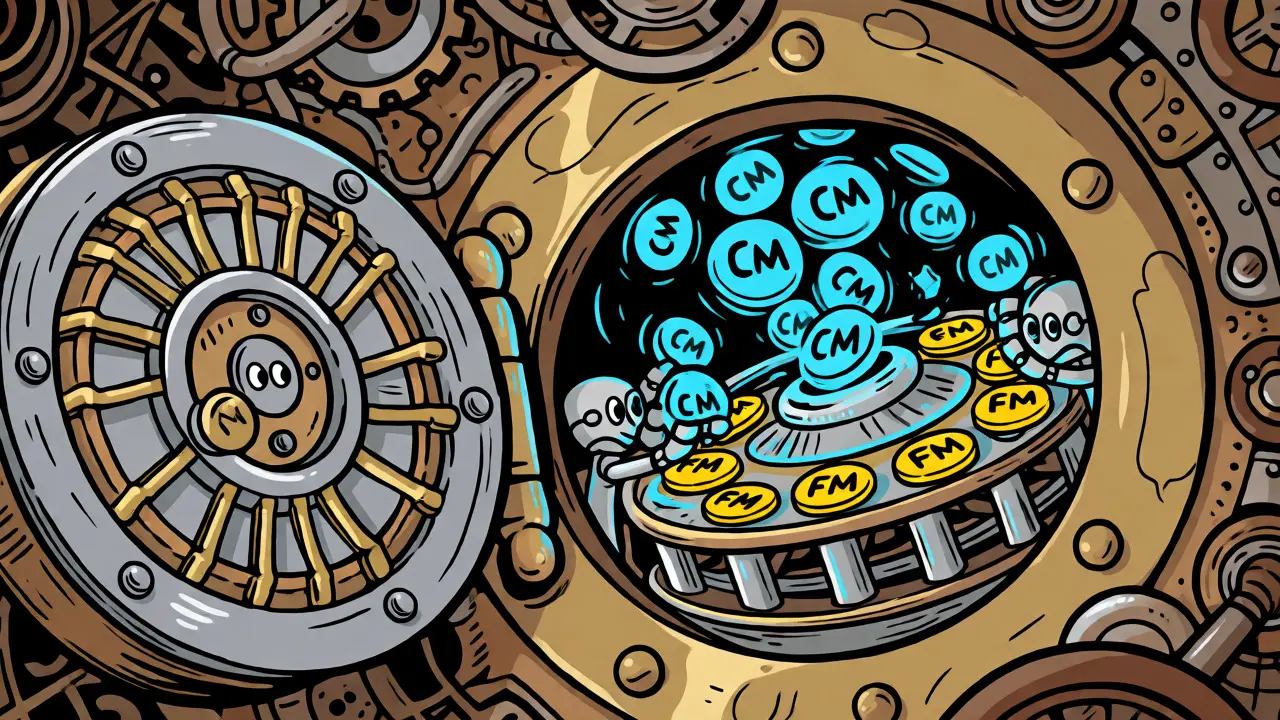
Here is where things get interesting-and slightly complex. You don’t just hold FM to earn rewards; you must stake it. When you stake FM, the protocol issues you CM (Claimable Moonlander) tokens. CM is essentially a time-locked version of FM, generated at a fixed rate per second. This mechanism ensures that rewards are distributed continuously rather than in lump sums, encouraging long-term holding.
Beyond CM emissions, FM stakers receive a share of protocol revenue paid directly in CRO (Crypto.com Chain Coin). According to Moonlander’s documentation, 20% of all open and close fees collected from traders are directed to the staking pool. This means your yield comes from two sources: new FM tokens (via CM conversion) and actual CRO earned from trader fees. This dual-yield structure is designed to incentivize participation even during periods of low token price appreciation.
| Reward Source | Asset Type | Description |
|---|---|---|
| Protocol Fees | CRO | 20% of open/close fees go to FM/CM stakers. |
| Emissions | CM Tokens | Time-locked FM generated per second for stakers. |
| Liquidity Pool | MLP Growth | 60% of fees go to MLP, indirectly supporting ecosystem stability. |
| Treasury | Funds | 20% of fees reserved for protocol development and reserves. |
Tokenomics: Supply and Allocation
The total supply of FM is capped at 20 billion tokens. This is a large number, which often raises eyebrows among investors who prefer scarce assets. However, in DeFi protocols, high supply is common to allow for granular micro-transactions and extensive incentive distribution.
While the official tokenomics page confirms the 20 billion cap, detailed allocation breakdowns have been sourced from third-party aggregators like CoinCarp. These reports suggest allocations for Team (5%), Marketing (15%), Partnerships (20%), Ecosystem (25%), and IDO (0.1%). Notably, these categories only account for about 65% of the supply, leaving a significant portion unaccounted for in public summaries. This gap highlights the importance of verifying vesting schedules before investing, as unlocked tokens can create sudden sell pressure.
It is crucial to distinguish FM from the MLP (Moonlander Liquidity Pool) token. While FM is used for staking and governance, MLP represents an index of assets held in the liquidity pool. Providing liquidity involves minting MLP, which exposes you to trader profits and losses. FM holders do not automatically bear this risk unless they also provide liquidity via MLP.
Trading Mechanics and Leverage Risks
Moonlander allows leverage up to 1,000x, though such extreme levels require specific conditions. Standard trading supports 1x to 100x leverage using collateral like USDC on Cronos EVM or vUSD/zkCRO on Cronos zkEVM. For higher leverage modes (500x-1,000x), users must stake a minimum amount of MLP tokens-200 MLP on Cronos EVM or 1,000 MLP on zkEVM.
Why does this matter for FM holders? Because high-leverage trading generates significant fee volume, which boosts FM yields. However, it also increases liquidation events. If a whale gets liquidated, the loss goes to the MLP pool, not directly to FM stakers, but severe drawdowns can affect overall protocol health and user confidence. The platform claims zero slippage for high-leverage trades, but this relies heavily on accurate oracle pricing and sufficient shared liquidity.
Market Data and Verification Challenges
If you check current market data for FM, you’ll notice inconsistencies across platforms. As of late 2026, prices hover around $0.0016, but 24-hour volume varies wildly-from under $400 on some aggregators to over $360 on others. More concerning is the circulating supply data. Some trackers report zero circulating supply, while others cite hundreds of millions. This discrepancy suggests either poor indexing by data providers or a lack of clear public reporting from the project regarding token unlocks.
Because of this, calculating market cap versus fully diluted valuation (FDV) is tricky. With a max supply of 20 billion, the FDV sits around $33 million at current prices. If circulating supply is indeed low, the immediate market cap is small, implying high volatility potential. Always verify contract addresses before interacting. The primary FM contract on Cronos is 0x37888159581ac2CdeA5Fb9C3ed50265a19EDe8Dd.
Pros and Cons of Holding FM
Pros:
- Direct Yield: Earn CRO and CM tokens simply by staking FM.
- Ecosystem Integration: Deep ties to the Cronos network and Crypto.com ecosystem.
- Growth Potential: Exposure to a protocol claiming billions in cumulative trading volume.
- Governance Rights: Vote on future protocol developments and treasury usage.
Cons:
- Thin Liquidity: Low daily trading volume makes entering/exiting large positions difficult.
- Data Opacity: Inconsistent circulating supply figures make valuation uncertain.
- Protocol Dependency: Value is entirely tied to Moonlander’s success; if the platform fails, FM becomes worthless.
- Smart Contract Risk: Like all DeFi assets, exposure to bugs or exploits exists despite audits.
Conclusion: Who Should Buy FM?
FM is best suited for DeFi enthusiasts already active in the Cronos ecosystem who understand the mechanics of perpetual exchanges. It is not a passive investment. Your returns depend on your ability to navigate staking interfaces, monitor protocol health, and accept the volatility inherent in early-stage DeFi projects. If you believe Moonlander will continue to attract traders seeking high-leverage access to crypto and real-world assets, FM offers a way to monetize that belief. Just keep an eye on those volume numbers and token unlock schedules-they tell the real story.
Is FM the same as MLP?
No. FM is the governance and staking token, while MLP is the liquidity provider token. FM stakers earn rewards from fees, whereas MLP holders represent ownership in the liquidity pool and are exposed to trader profit and loss.
Where can I buy Moonlander (FM)?
FM is primarily traded on decentralized exchanges within the Cronos ecosystem. Due to thin liquidity, always verify the correct contract address (0x37888159581ac2CdeA5Fb9C3ed50265a19EDe8Dd) before swapping.
What is the maximum supply of FM?
The maximum and total supply of FM is fixed at 20 billion tokens. There is no inflationary minting beyond this cap.
Do FM holders get dividends?
FM stakers receive a share of protocol fees paid in CRO, which functions similarly to dividends. Additionally, they earn CM tokens, which convert to FM over time.
Is Moonlander audited?
Moonlander states its contracts are supplied on an "as-is" basis. Users should independently verify audit reports for specific contract versions, as security standards vary across deployments on Cronos EVM and zkEVM.